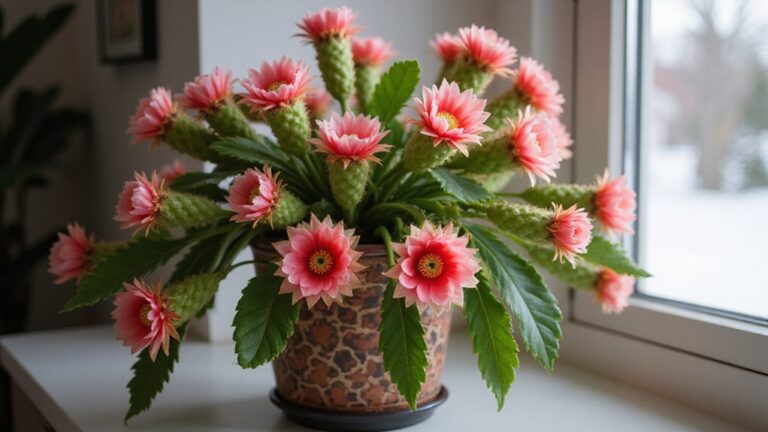

Like Persephone returning from the underworld, the first spring flowers signal winter’s end and herald the growing season ahead. You’ll find these early bloomers pushing through frozen ground weeks before traditional spring arrives, offering essential nectar for emerging pollinators and much-needed color after months of gray. The secret to enjoying these resilient performers lies in knowing which ones to plant, where they’ll thrive, and exactly when they’ll appear in your garden.
Snowdrops Push Through Snow as Winter’s Earliest Bloomers
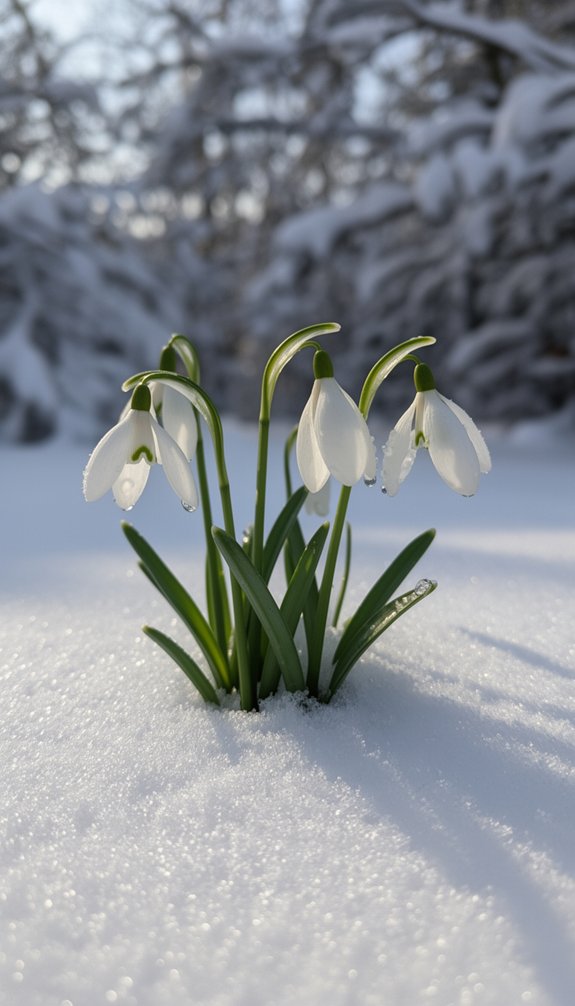
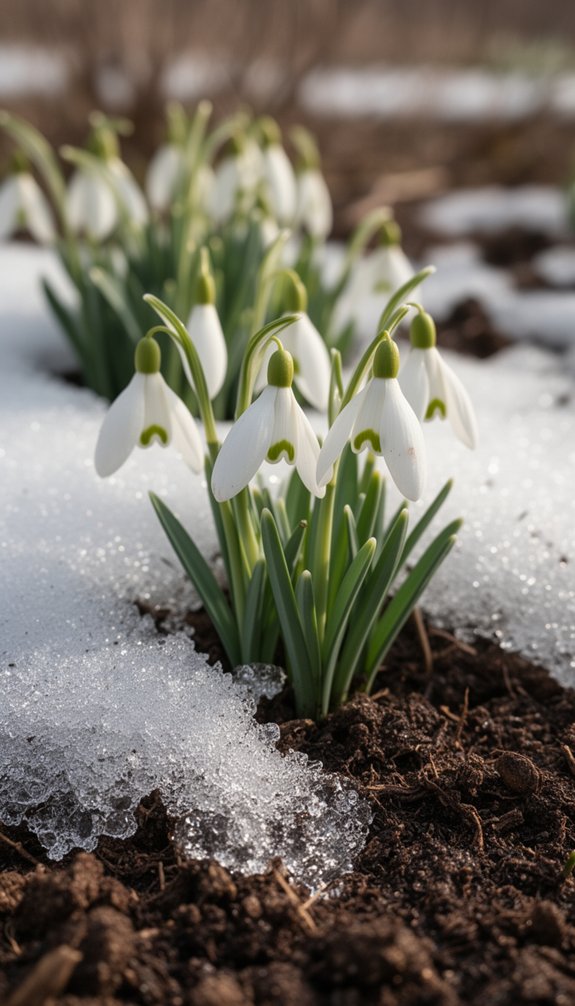
Snowdrops burst through frozen ground in late winter, often blooming while snow still blankets the garden, which makes them the earliest flowers of the season.
You’ll find these delicate white blooms appearing in January or February, depending on your climate zone. Plant bulbs 3 inches deep in fall, spacing them 3 inches apart in clusters for maximum impact.
Bulb propagation occurs naturally as clumps multiply over time, which you can divide every 3-4 years after flowering.
Snowdrop folklore suggests these flowers symbolize hope and renewal, making them meaningful additions beyond their early-season beauty and resilience. If you’re interested in preserving your spring harvest later in the season, ceramic fermentation crocks provide an excellent way to store and ferment vegetables from your garden.
Crocuses Emerge in Late Winter With Bold Purple and Yellow
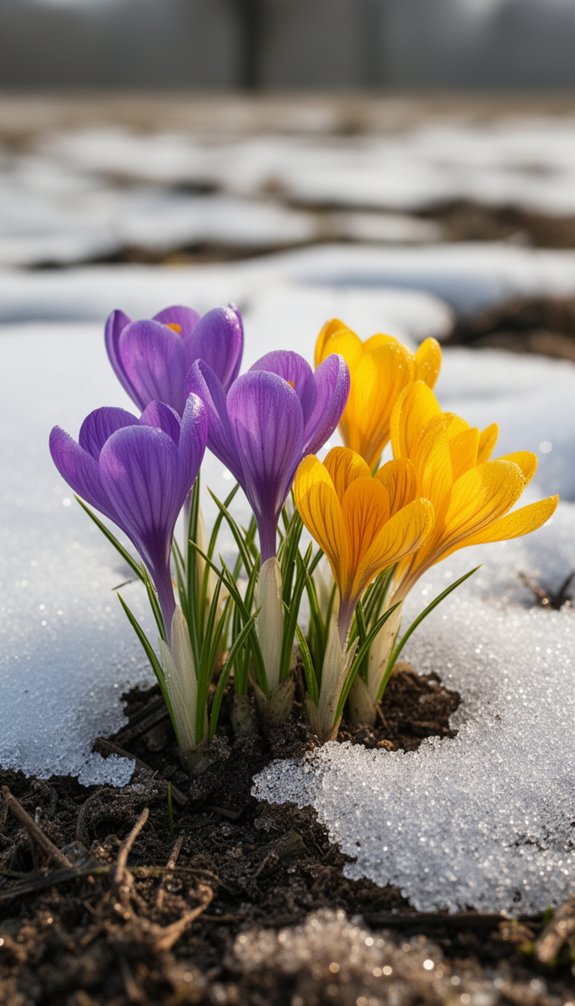
Following closely behind snowdrops, crocuses bring vibrant splashes of purple, yellow, and white to your garden in late winter, typically blooming from late February through March.
You’ll want to focus on bulb planting in fall, setting corms 3-4 inches deep and spacing them 3 inches apart.
These hardy flowers aren’t fussy, but they do require good soil drainage to prevent rot.
Plant them in groups of 10-15 for maximum visual impact, and you’ll see them naturalize over time, spreading slowly to create larger patches that return year after year with minimal maintenance required.
After blooming, you can use an electric mulcher shredder to process the spent foliage and other garden debris into nutrient-rich mulch for your beds.
Winter Aconite Carpets Bare Ground in Bright Golden Yellow
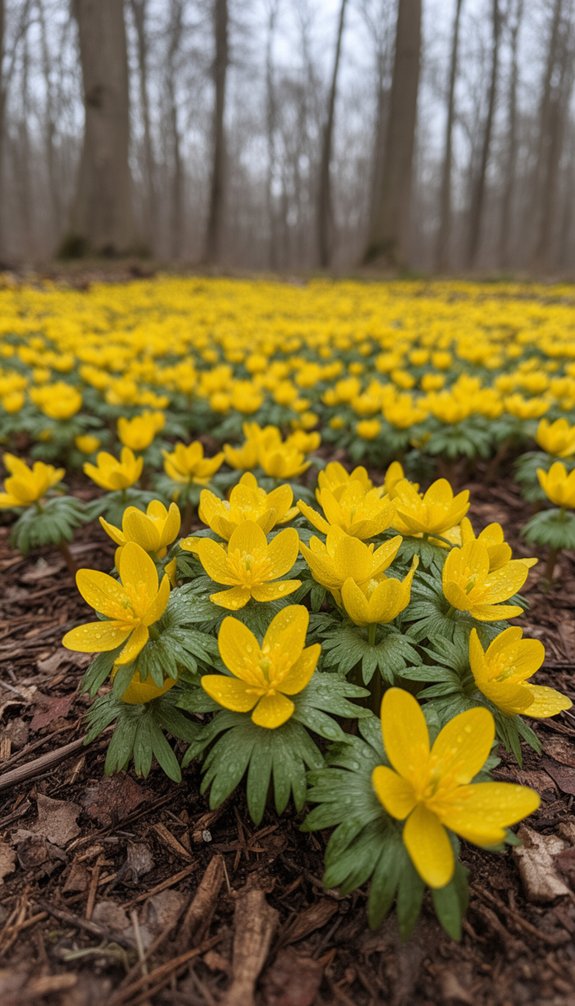
Often overlooked but equally impressive, winter aconite (Eranthis hyemalis) creates stunning golden carpets that brighten bare ground from January through early March, depending on your region.
You’ll find these low-growing plants reach just 3-4 inches tall, producing buttercup-like blooms above distinctive ruff-like foliage.
For successful establishment, you’ll need proper ground preparation, including loosening soil 4-6 inches deep and adding compost to improve drainage.
Plant tubers 2-3 inches deep in fall for spring blooms.
A forged steel garden fork works particularly well for loosening compacted soil around planting areas without damaging nearby tuber structures.
Winter aconite excels at pollinator attraction, providing essential early nectar for bees emerging from hibernation when few other food sources exist.
Hellebores Bloom in Shade From Late Winter Through Spring
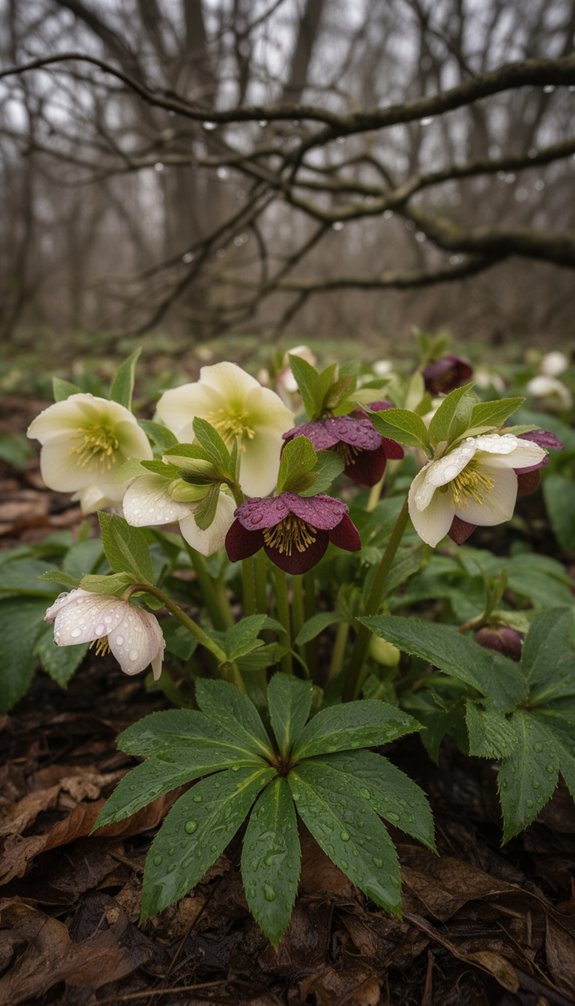
Thriving where most flowering plants struggle, hellebores (Helleborus spp.) deliver reliable blooms in shaded gardens from late winter through spring, making them invaluable for brightening dark corners under trees and along north-facing walls.
These shade perennials produce nodding, cup-shaped flowers in white, pink, purple, or green, depending on the variety you choose. Plant them 18 inches apart in well-draining soil enriched with compost, and they’ll return year after year with minimal care.
Their leathery, dark green foliage stays attractive throughout winter, serving as excellent evergreen companions to hostas, ferns, and other shade-loving plants in your garden. When adding organic matter to your planting beds, consider storing kitchen scraps in a stainless steel compost bin to create nutrient-rich amendments for your hellebores and other perennials.
Glory of the Snow Creates Blue Drifts in Early Spring
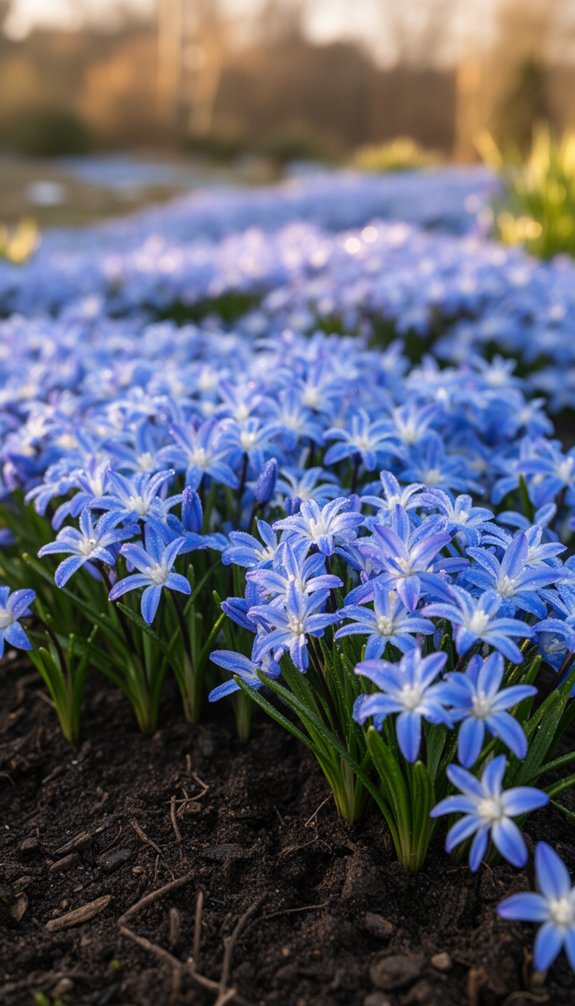
Among the earliest bulbs to bloom, glory of the snow (Chionodoxa spp.) produces brilliant blue, star-shaped flowers that carpet the ground in cheerful drifts while snow still lingers in shaded spots. You’ll appreciate their alpine adaptations, which enable them to tolerate freezing temperatures and emerge when few other plants dare.
Plant bulbs 3 inches deep in fall, spacing them 2-3 inches apart in groups of 10 or more for maximum impact. Their early blooms provide critical pollinator interactions, offering nectar to emerging bees when food sources remain scarce.
These low-maintenance bulbs naturalize readily, spreading to create expanding blue carpets each spring. To extend the visual impact into evening hours, consider adding solar landscape lights to highlight these early blooming drifts.
Siberian Squill Naturalizes Into Stunning Blue Carpets
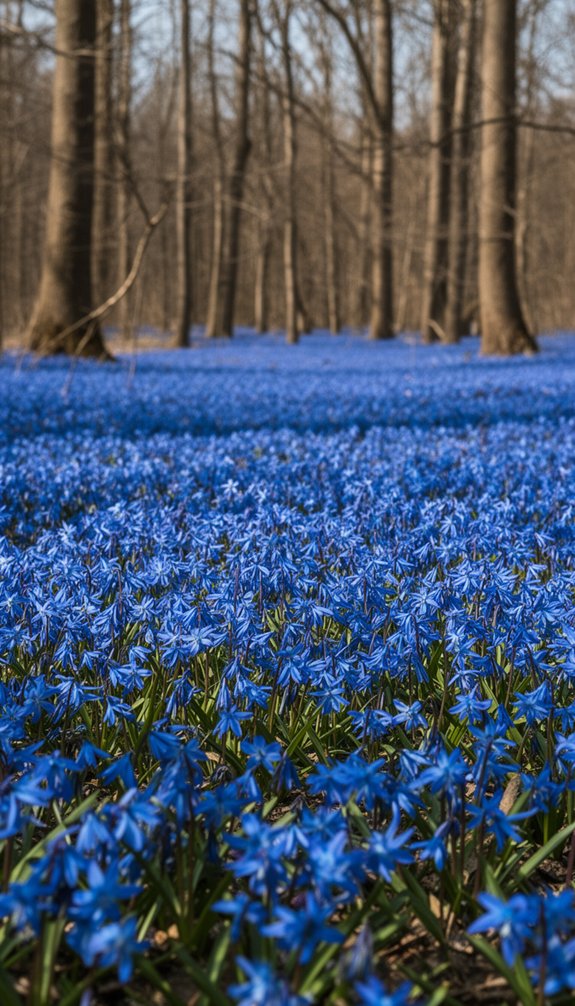
Siberian squill (Scilla siberica) transforms bare spring landscapes into seas of intense cobalt blue, creating one of nature’s most breathtaking displays when dozens of nodding, bell-shaped flowers blanket the ground.
You’ll appreciate its exceptional pollinator attraction, providing early nectar for bees emerging from winter dormancy.
Plant bulbs 3 inches deep in fall, spacing them 2-4 inches apart in groups of 25 or more for maximum impact.
These hardy bulbs naturalize readily through self-seeding, multiplying into expansive carpets over several years.
Be aware of their invasive potential in some regions, as they can spread aggressively into woodlands and lawns.
Consider planting them in raised garden beds metal structures to contain their spread while still enjoying their stunning spring display.
Chionodoxa and Scilla: Telling These Early Blue Bulbs Apart
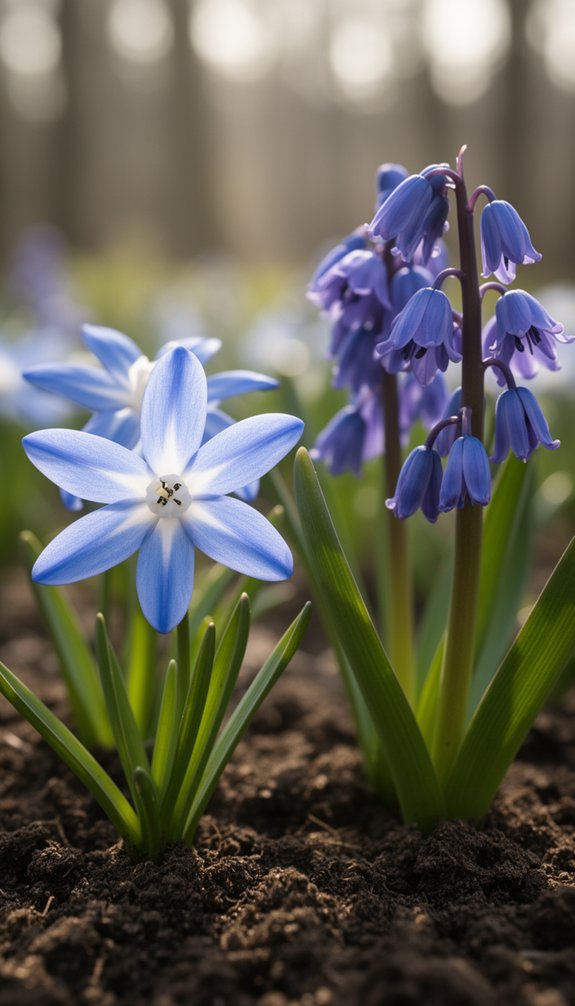
While Siberian squill creates those magnificent blue carpets, you’ll often encounter another early bloomer that looks remarkably similar, and distinguishing between Chionodoxa (glory-of-the-snow) and Scilla species can challenge even experienced gardeners.
The key difference lies in bulb anatomy and flower structure: Chionodoxa blooms face upward with fused petals forming a white center, while Scilla flowers nod slightly downward with separate petals.
Both spread through seed propagation and bulb offsets, creating naturalized colonies within three to four years.
Examine the petal arrangement closely at bloom time, which typically occurs in late February through early April, to identify your specific species correctly.
For efficient watering of these delicate spring bulbs, consider using a stainless steel hose reel to keep your garden hoses organized and prevent damage to emerging foliage.
Early Daffodil Varieties Bloom Weeks Before Standard Types
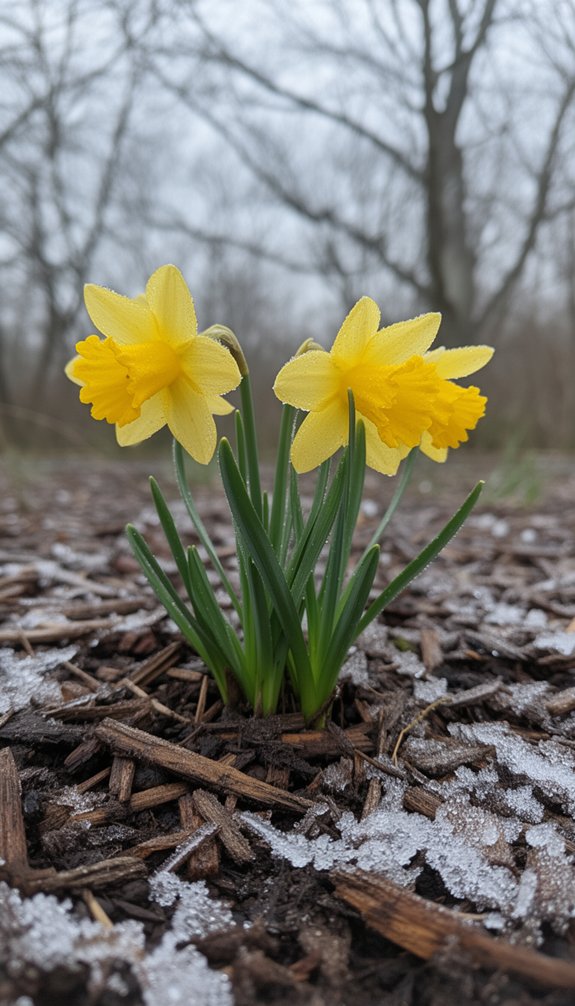
Breaking through frozen ground as early as late February, early daffodil varieties like ‘February Gold’ and ‘Tête-à-Tête’ deliver cheerful blooms three to four weeks ahead of traditional mid-spring cultivars.
These early bloomers thrive in zones 4-8, requiring no special treatment beyond standard bulb care.
Plant them 6 inches deep in fall, spacing bulbs 4-6 inches apart in well-draining soil.
Cold hardy daffodils withstand temperatures down to -30°F, making them reliable performers even during late-season freezes.
You’ll find ‘Rijnveld’s Early Sensation’ particularly impressive, opening its golden trumpets in late winter while snow still covers the ground in many regions.
After blooms fade, consider adding spent foliage and plant debris to a large compost tumbler to create nutrient-rich soil for next season’s bulbs.
Grape Hyacinths Bring Fragrance and Purple Spikes in Early Spring
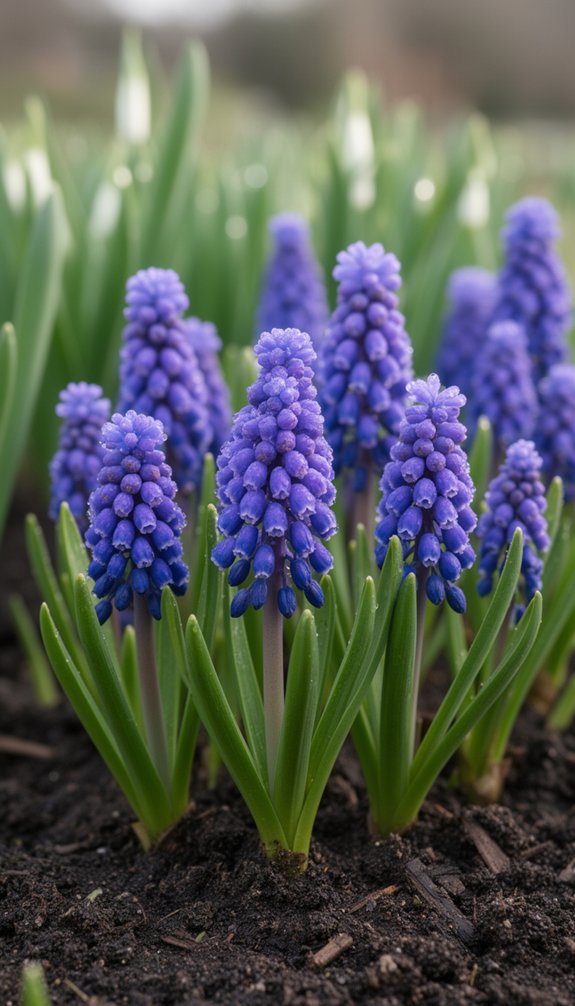
Alongside those sunny yellow daffodils, grape hyacinths (Muscari armeniacum) carpet gardens with dense clusters of cobalt-blue flowers that resemble tiny grapes stacked on 6-8 inch stems.
You’ll appreciate their sweet, musky scent pairing perfectly with daffodils in early spring borders. These bulbs naturalize easily, spreading into larger colonies each year through self-seeding and bulb division.
Plant them 3 inches deep in fall, spacing bulbs 2-3 inches apart in groups of 10 or more for maximum impact.
Their early blooms provide vital pollinator attraction when few other flowers are available, bringing bees and butterflies to your garden in March and April. Consider showcasing these spring beauties in large outdoor planters to create stunning displays on patios and entryways.
Primroses Offer Jewel-Toned Blooms for Shady Garden Edges
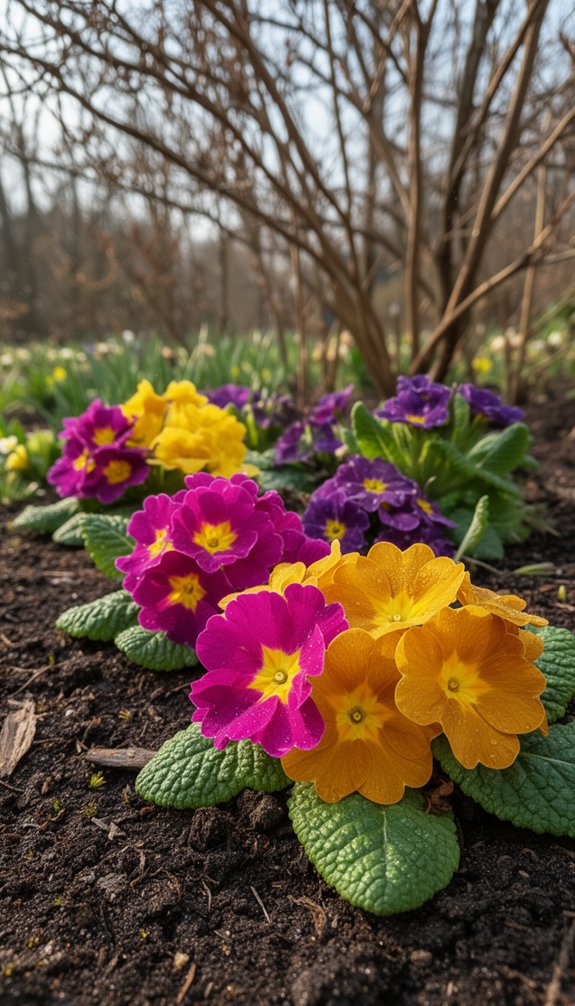
When daffodils and grape hyacinths fade in late spring, primroses (Primula × polyantha) take center stage in shaded garden beds, offering vibrant clusters of yellow, red, pink, purple, and white flowers with distinctive yellow centers.
You’ll find these low-growing perennials thrive in shady borders where other spring bloomers struggle, reaching just 6-8 inches tall with rosettes of crinkled leaves.
Plant them in moist, well-drained soil enriched with compost, spacing them 8-10 inches apart for best results.
Their jewel tones create stunning displays along woodland paths, under deciduous trees, or nestled near foundations where morning sun filters through branches.
To protect your garden’s delicate spring blooms from hungry wildlife, consider installing a squirrel-proof bird feeder nearby to keep visiting birds well-fed and away from your flowers.
Lungwort Blooms in Early Spring With Spotted Silver Leaves
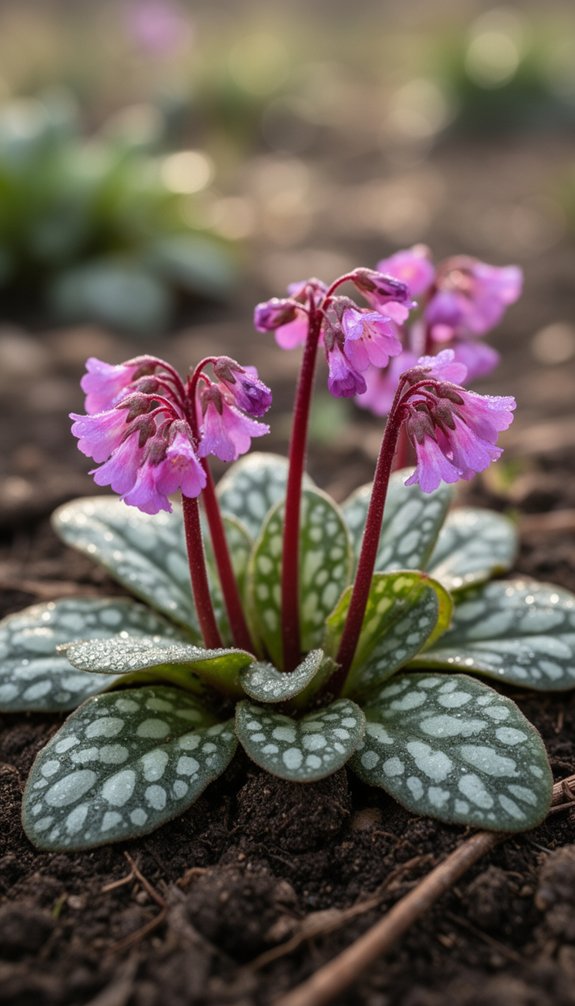
Another shade-loving perennial that complements primroses in early spring gardens is lungwort (Pulmonaria), which produces clusters of tubular flowers in shades of pink, blue, purple, or white while its spotted foliage adds visual interest throughout the growing season.
You’ll appreciate lungwort’s exceptional shade tolerance, as it thrives in partial to full shade where other plants struggle.
The silver foliage, marked with distinctive spots and blotches, remains attractive from spring through fall, providing months of ornamental value.
Plant lungwort 12 to 18 inches apart in moist, well-draining soil, and divide clumps every three to four years to maintain vigor.
Pasque Flower Opens Fuzzy Purple Blooms in Late Winter
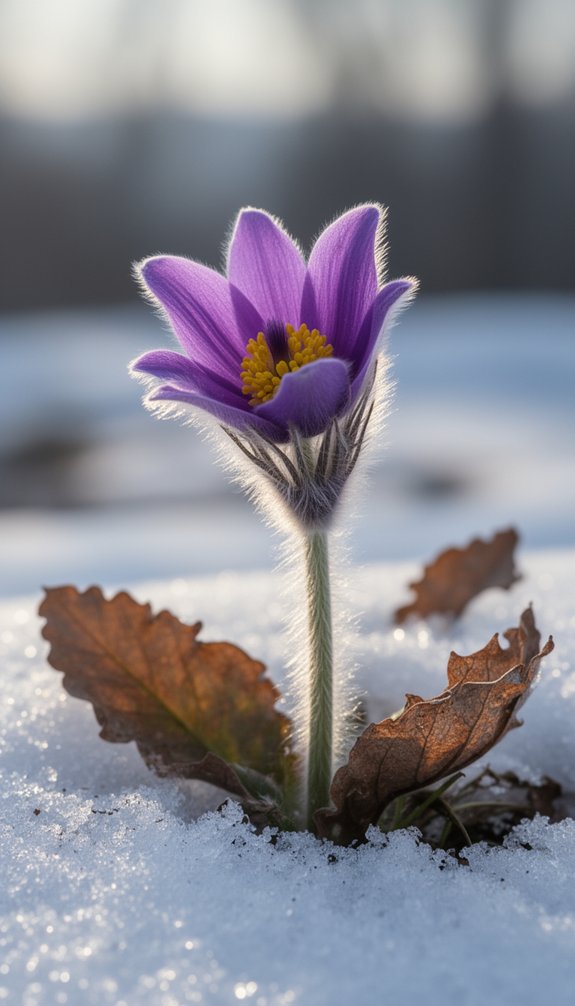
Among the earliest bloomers in the spring garden, pasque flower (Pulsatilla vulgaris) produces stunning cup-shaped flowers covered in silky hairs that emerge in late winter to early spring, often pushing through the last remnants of snow.
You’ll appreciate its fuzzy texture on both blooms and foliage, which protects the plant from cold temperatures. The purple flowers, measuring 2-3 inches across, provide essential pollinator attraction when few other food sources exist.
Plant pasque flower in well-drained soil with full sun exposure, spacing them 12 inches apart. They’ll reach 6-10 inches tall and tolerate drought once established.
Spring Snowflake Resembles Taller Snowdrops With Green-Tipped Bells
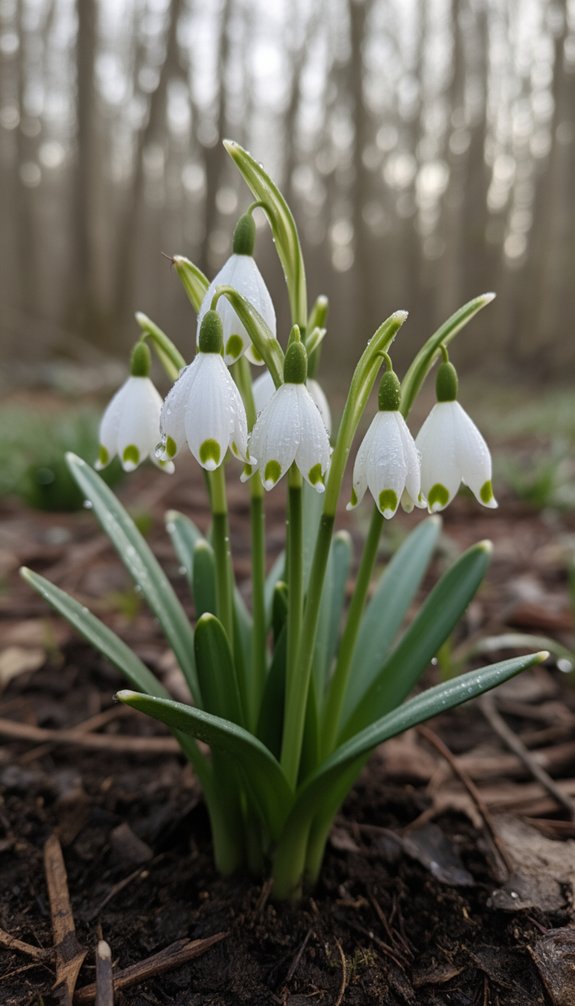
Spring snowflake (Leucojum vernum) stands taller than its commonly confused cousin, the snowdrop, reaching heights of 8-12 inches with distinctive bell-shaped flowers adorned with green or yellow spots at each petal tip.
You’ll notice the leaf markings appear as bright green, strap-like foliage that emerges alongside the blooms in late winter.
Plant bulbs 4 inches deep in fall, spacing them 3-4 inches apart for best results.
These bulbs thrive in habitat preferences including moist, well-drained soil and partial shade, though they’ll tolerate full sun in cooler climates.
They naturalize readily, forming attractive colonies over time.
Marsh Marigold Thrives in Wet Soil With Glossy Yellow Flowers
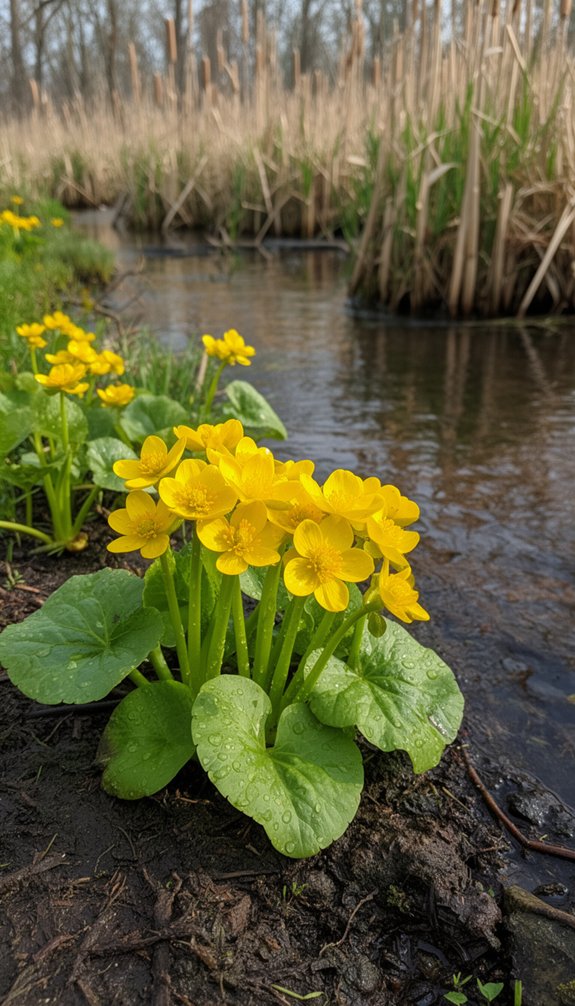
Marsh marigold (Caltha palustris) brightens waterlogged areas with its cheerful, buttercup-like blooms that measure 1-2 inches across and feature glossy yellow petals surrounding a cluster of golden stamens.
You’ll find this native perennial thriving in boggy spots, pond edges, and stream banks where most flowers struggle. It’s perfect for wetland gardening projects, reaching 12-18 inches tall and spreading 12-24 inches wide.
The plant blooms from March through May, depending on your location, and its glossy petals catch sunlight beautifully. Plant it in full sun to partial shade in consistently moist or standing water for best results.
Virginia Bluebells Carpet Woodland Gardens in April
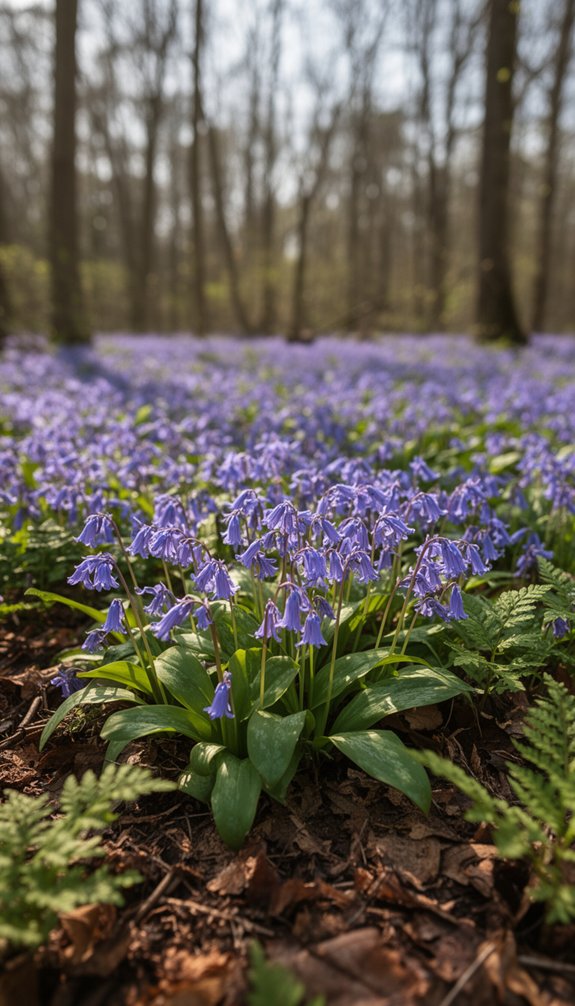
While marsh marigolds thrive in saturated soils near water features, Virginia bluebells (Mertensia virginica) prefer the dappled shade and rich, moist earth found beneath deciduous trees.
You’ll notice their pink buds opening into sky-blue, bell-shaped flowers that attract native pollinators like bumblebees and butterflies.
Plant them in fall, spacing bulbs 12 inches apart in groups of at least ten for maximum impact.
Monitor soil moisture throughout spring, keeping the ground consistently damp but not waterlogged.
The foliage dies back completely by early summer, so you can interplant with hostas or ferns to fill the space afterward.
Trout Lily and Corydalis: Delicate Woodland Wildflowers for Shade
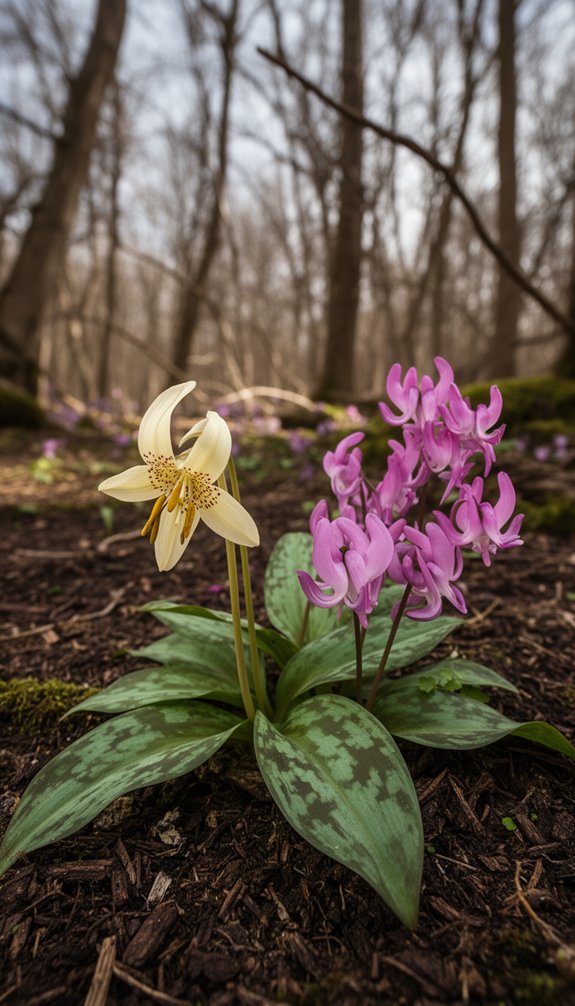
As woodland gardens shift into mid-spring, trout lily (Erythronium americanum) and yellow corydalis (Corydalis lutea) emerge with delicate blooms that brighten shaded areas beneath mature trees.
You’ll find trout lily’s nodding yellow flowers appearing in early April, standing 4-6 inches tall with distinctive mottled leaves that resemble brook trout markings.
Yellow corydalis offers continuous blooms from April through fall, reaching 12-15 inches in height.
Both species serve as valuable pollinator hosts, attracting native bees and butterflies to shaded spaces.
Plant them as shade companions alongside ferns and hostas, spacing trout lily bulbs 4 inches apart and corydalis plants 8 inches apart for best coverage.
Best Early Spring Bulbs to Plant Together for Continuous Color
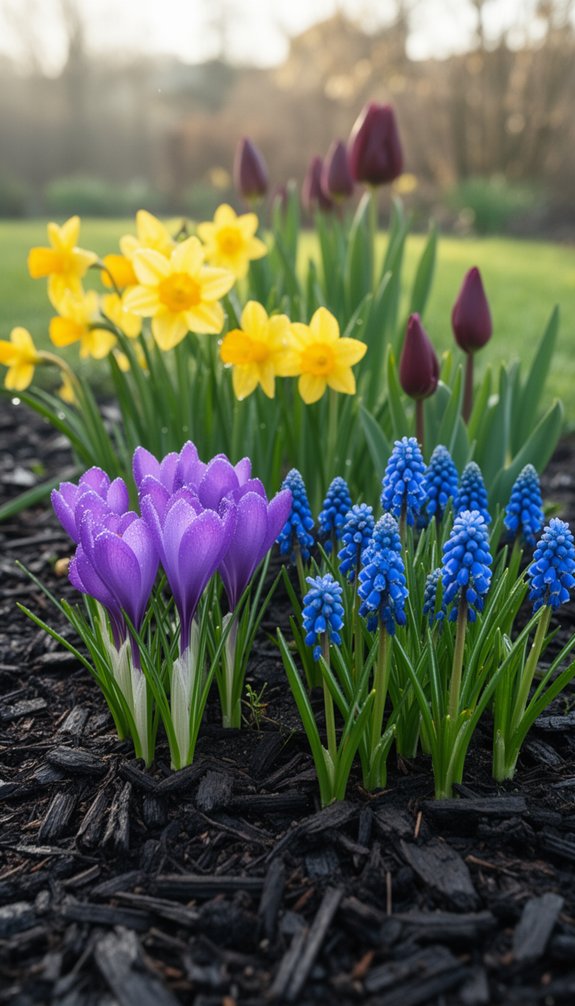
Strategic bulb layering creates a succession of blooms that extends your garden’s color display from February through May, transforming bare soil into a continuously changing floral showcase.
You’ll achieve continuous color through companion plantings by combining early bloomers like snowdrops and crocuses with mid-season daffodils and late tulips.
Plant bulbs using staggered planting depths, placing larger tulip bulbs 8 inches deep with smaller crocuses 3-4 inches above them.
This layering technique maximizes space while ensuring each variety receives proper depth.
Combine purple crocuses with yellow daffodils, or white snowdrops with blue scilla for striking color contrasts throughout spring.
Magnolia Trees: Dramatic Blooms Before Leaves Emerge
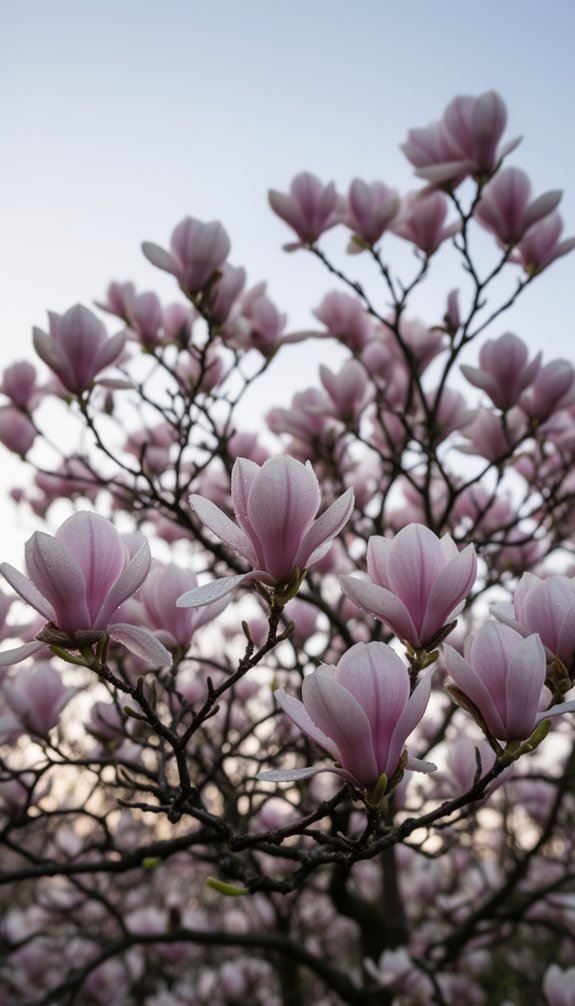
Magnolia trees deliver one of spring’s most spectacular displays when their enormous flowers burst open on bare branches, creating clouds of pink, white, or purple blooms that dominate the landscape weeks before leaves appear.
You’ll find magnolias bloom during early to mid-spring, with flowering time varying by variety and climate zone. Star magnolias open first, followed by saucer magnolias with their massive 8-10 inch blossoms.
These trees work exceptionally well for urban planting since they tolerate pollution and confined spaces. Plant them in full sun with well-draining soil, and you’ll enjoy their breathtaking show for decades.
Forsythia Brightens Landscapes With Golden Yellow Branches
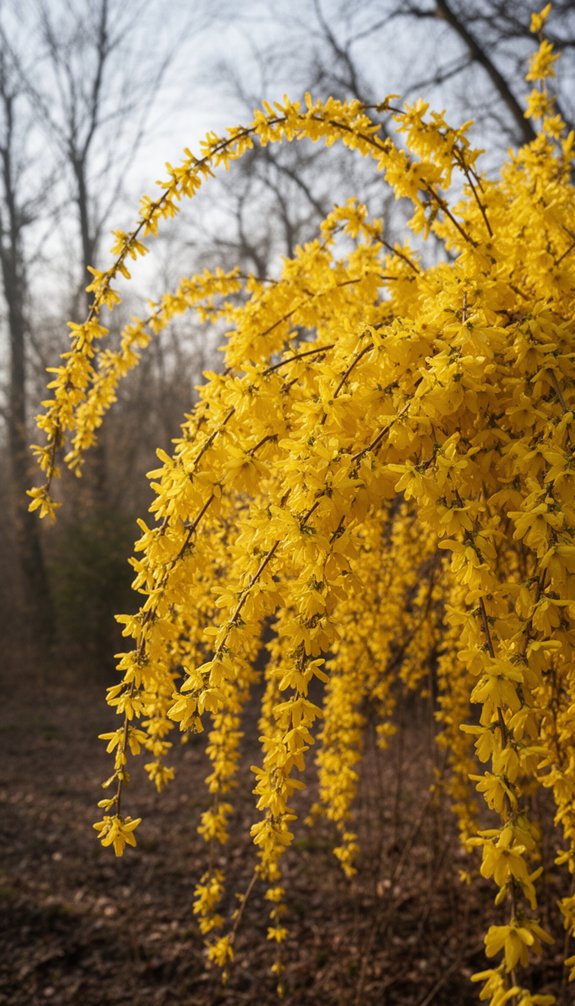
While magnolias create drama with their large, showy blooms, forsythia shrubs announce spring’s arrival with an explosion of brilliant yellow flowers that transform entire branches into golden torches.
You’ll notice these hardy shrubs bloom on old wood, which makes pruning timing critical—cut branches immediately after flowering ends to preserve next year’s buds.
Though forsythia blooms appear before most pollinators emerge, limiting pollinator attraction, they still provide early nectar for hardy bees.
These low-maintenance shrubs tolerate various soil conditions, grow 8-10 feet tall, and spread 10-12 feet wide, creating stunning hedges or specimen plants.
Flowering Quince and Pussy Willow: Early-Blooming Shrubs
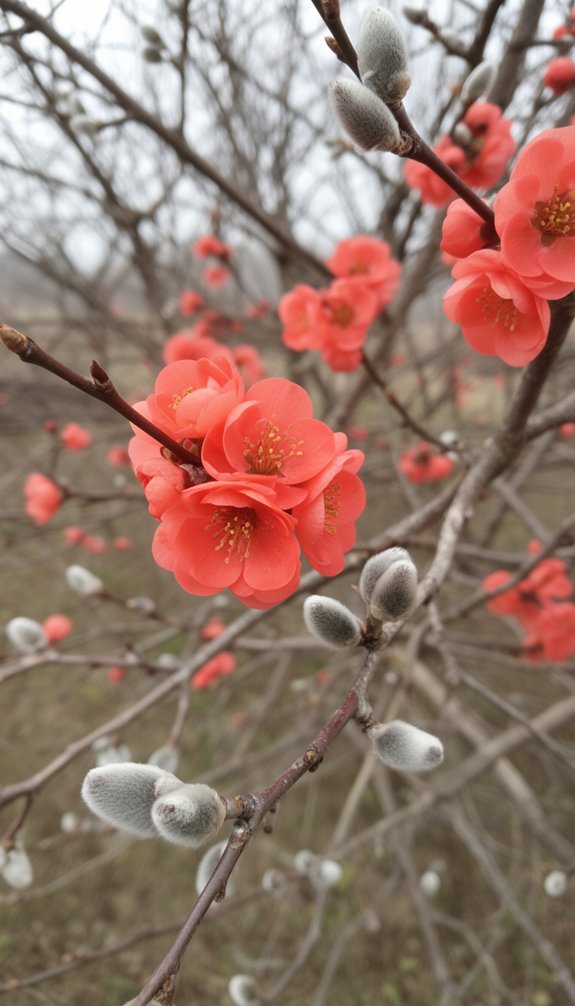
Flowering quince and pussy willow offer gardeners two distinct approaches to early spring color, with quince displaying vibrant coral, red, or pink blooms along thorny branches while pussy willow produces fuzzy, silvery catkins that feel soft to the touch.
You’ll find flowering quince blooms attract early pollinators, providing essential pollinator shelter when few other food sources exist.
Both shrubs benefit from winter pruning to maintain their shape and encourage abundant flowering.
Plant pussy willow in moist soil where it’ll reach 15-20 feet, while flowering quince thrives in well-drained locations, growing 6-10 feet tall with moderate water requirements.
When to Plant Spring Bulbs for Earliest Possible Blooms
To achieve the earliest possible spring blooms, you’ll need to plant most spring bulbs during fall, typically between September and November, depending on your climate zone and the specific bulb varieties you’ve chosen.
Proper soil preparation guarantees healthy root development before winter arrives, so amend your planting area with compost and confirm good drainage.
Most spring bulbs require bulb chilling, a cold dormancy period of 12-16 weeks at temperatures between 35-45°F, which naturally occurs when you plant in fall. This chilling period triggers the biochemical processes necessary for spring flowering, making timing essential for success.
Frequently Asked Questions
How Do I Protect Early Spring Flowers From Late Frosts?
You’ll want to cover your blooms with frost cloths when temperatures drop unexpectedly. Consider timing bulbs to plant varieties that emerge after your area’s last frost date, ensuring they’re naturally protected from cold damage.
Can Early Spring Bulbs Be Grown Successfully in Containers?
You’ll find container gardening opens a window of possibility—yes, early spring bulbs thrive beautifully in pots! Focus on proper bulb care: make certain excellent drainage, use quality potting mix, and you’ll enjoy stunning blooms.
What Fertilizer Should I Use for Early Blooming Spring Flowers?
You’ll want to use a balanced granular fertilizer with a 10-10-10 ratio applied in early spring. Mix organic composted materials into the soil beforehand to provide nutrients and improve drainage for healthier blooms.
How Do I Prevent Squirrels From Digging up Spring Bulbs?
You’ll prevent squirrels from digging up your bulbs by using scent deterrents like cayenne pepper or predator urine around planted areas. Motion-activated sprinklers also work effectively, startling squirrels away whenever they approach your garden beds.
Should I Deadhead Early Spring Flowers After They Finish Blooming?
It depends on your goals. You’ll want to deadhead if you’re preventing self-seeding, but skip it for seed saving. Consider pruning timing too—wait until foliage yellows so bulbs can store energy for next year’s blooms.
Conclusion
You’ve learned about 21 early bloomers that’ll transform your garden from winter’s gray palette into a colorful display, so start planning your spring bulb order now. Plant bulbs in fall, positioning them in layers with the earliest bloomers like snowdrops and crocuses near the surface, which creates successive waves of color. You’ll need to water them well after planting, then let nature take its course. Soon, you’ll enjoy months of blooms that feed pollinators and lift spirits after winter’s dormancy.