


A blanket of white blooms can transform your garden into a peaceful haven. You’ll find many beautiful options to choose from. White flowering trees create striking focal points and bring elegance to any landscape, regardless of its size or style. They offer more than just pretty flowers – they provide shade, attract helpful pollinators, and add structure to your outdoor space. Let’s explore fifteen stunning white-flowered trees that will brighten your garden and boost your curb appeal throughout the seasons.
Choosing the right white flowering tree depends on your available space, climate and landscaping goals. Some varieties stay compact and fit perfectly in small front yards, while others become large shade trees that create a dramatic focal point.
The table below compares some of the most popular white flowering trees based on mature size, bloom season and ideal landscape use.
| Tree | Mature Height | Bloom Season | Best For |
|---|
| Flowering Dogwood | 15–30 ft | Spring | Small yards |
| Star Magnolia | 15–20 ft | Early Spring | Early blooms |
| White Redbud | 15–25 ft | Spring | Compact gardens |
| Japanese Snowbell | 20–30 ft | Late Spring | Fragrance |
| Southern Magnolia | 60–80 ft | Summer | Large landscapes |
| Natchez Crape Myrtle | 20–30 ft | Summer | Long blooming season |
| Carolina Silverbell | 30–40 ft | Spring | Partial shade |
Flowering Dogwood (Cornus Florida): Springtime Classic
A jewel of American landscapes, the Flowering Dogwood transforms any garden with its elegant white blossoms. You’ll enjoy its stunning display from mid-April through May when horizontal branches become draped in four-petaled flowers.
The tree reaches 15-30 feet at maturity, making it perfect for smaller yards and spaces beneath power lines.
Plant your Dogwood in partial shade for best results. It thrives in well-drained, slightly acidic soil and doesn’t tolerate drought well. You’ll need to water it regularly during its first few years.
The tree offers multi-season interest with summer berries that attract birds and brilliant red foliage in fall.
Consider planting Dogwoods near patios or as understory trees where neighbors can also appreciate their beauty. They’ll create dappled shade that’s perfect for woodland gardens.
Recommended Products

VIBRANT ROSY-PINK BLOOMS: This variety is famous for its ability to produce a massive display of elegant, four-petaled pink flowers in early spring. These iconic blossoms can add a high-impact look and bring a touch of sophisticated charm to your favorite outdoor location as one of the first signs of the season.

CLASSIC SPRING BLOSSOMS: This variety is famous for its ability to produce a massive display of elegant, four-petaled white flowers in early spring. These iconic blossoms can add a high-impact look and bring a touch of sophisticated charm to your favorite outdoor location as one of the first signs of the season.

VIBRANT ROSY-PINK BLOOMS: This variety is famous for its ability to produce a massive display of elegant, four-petaled pink flowers in early spring. These iconic blossoms can add a high-impact look and bring a touch of sophisticated charm to your favorite outdoor location as one of the first signs of the season.
Star Magnolia (Magnolia Stellata): Early Season Elegance

Before other spring bloomers awaken, the Star Magnolia bursts into life with spectacular star-shaped flowers. You’ll notice its fragrant white blooms appearing as early as February in milder climates.
This compact tree reaches just 15-20 feet tall, making it perfect for smaller gardens or as a focal point near patios.
Star Magnolias thrive in well-drained soil with consistent moisture during establishment. Plant them in a location that receives full morning sun but offers afternoon shade, as this protects the delicate blooms from late frosts.
Their low maintenance needs make them ideal for busy gardeners. You can enhance their natural beauty by mulching around the base and removing any damaged branches after flowering.
These trees offer four-season interest with summer foliage, interesting branching patterns, and smooth gray bark.
Recommended Products
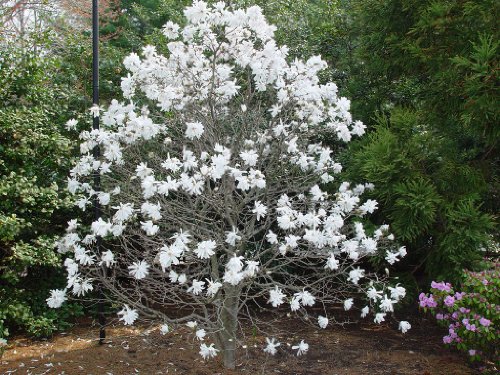
These are ready to plant and should be put in the ground according to the included instructions upon arrival. All pictures are of fully grown plants. Sizes shipped are in the title and description. Deciduous plants do not have leaves in the winter.

STUNNING STAR-SHAPED BLOOMS: This variety is famous for its ability to produce large, pure white flowers with 12 to 18 ribbon-like petals. These elegant blossoms can add a high-impact look and a splash of sophisticated color to your favorite outdoor location as one of the first signs of spring.

These are ready to plant and should be put in the ground according to the included instructions upon arrival. All pictures are of fully grown plants. Sizes shipped are in the title and description. Deciduous plants do not have leaves in the winter.
White Crape Myrtle (Lagerstroemia Indica): Summer’s Lacy Delight

While many flowering trees fade after spring, White Crape Myrtles deliver stunning summer blooms that transform gardens into wonderlands.
These hardy trees thrive in zones 7-9 and reach heights of 15-25 feet. You’ll appreciate their creamy clusters of delicate flowers that last from June through September. Their smooth, peeling bark adds winter interest after the blooms fade.
Plant your White Crape Myrtle in full sun for best flowering results. They prefer well-drained soil and don’t need much water once established.
You can shape these versatile trees as multi-stemmed specimens or single-trunked standards. Prune in late winter to encourage fuller growth and more prolific blooming.
Your neighbors will admire these low-maintenance beauties that provide shade and spectacular floral displays during summer’s heat.
White Fringe Tree (Chionanthus Virginicus): Native Showstopper

For gardeners seeking native elegance, the White Fringe Tree offers a striking contrast to summer-blooming trees. This North American native erupts with delicate, fringe-like white flowers in late spring. You’ll love how its blossoms seem to float on the branches like soft clouds.
White Fringe Trees grow slowly to 12-20 feet tall and prefer partial shade. They thrive in moist, well-drained soil but can adapt to different conditions once established. Soil health and fertility are essential for the thriving of this tree, as well as proper watering techniques.
Plant yours where you can appreciate the fragrant blooms up close, perhaps near a patio or walkway. In fall, female trees produce blue-black fruits that attract birds to your garden. The yellow autumn foliage adds another season of interest to your landscape.
Japanese Snowbell (Styrax Japonicus): Pendulous Bell Flowers

The Japanese Snowbell stands out as a truly enchanting addition to any garden. This elegant tree grows 20-30 feet tall with a rounded, spreading canopy.
You’ll be delighted by its pendulous white bell-shaped flowers that appear in late spring. They dangle gracefully beneath horizontal branches, creating a stunning display against dark green leaves. The tree’s smooth gray bark adds winter interest when flowers are gone.
Japanese Snowbell thrives in partial shade and prefers moist, well-drained soil. Plant it where you can enjoy the blooms from underneath, perhaps near a patio or walkway.
It’s perfect for smaller gardens and doesn’t require much pruning to maintain its lovely shape. Your neighbors will certainly admire this beautiful specimen when it’s in full bloom.
White Redbud (Cercis Canadensis ‘Alba’): Heart-Shaped Splendor

Among spring-flowering trees, White Redbud offers a unique twist on a familiar favorite. The pure white blossoms emerge directly from branches before leaves appear, creating a stunning snow-like effect in your garden.
You’ll love how these delicate flowers contrast beautifully against dark bark in early spring. White Redbud grows 15-25 feet tall and adapts well to various soil conditions.
The tree’s distinctive heart-shaped leaves provide interest long after flowering ends. Plant this showstopper near patios or entrances where visitors can appreciate its beauty up close.
It works wonderfully as a focal point or in mixed borders with spring bulbs. Your neighbors will appreciate how this native cultivar supports local pollinators while adding elegant charm to your landscape.
White Redbud requires minimal pruning and maintenance once established.
Ivory Silk Japanese Tree Lilac: Fragrant Late Bloomer

While early spring brings White Redbud’s lovely display, summer gardens deserve their own star performer. The Ivory Silk Japanese Tree Lilac fills this role beautifully with its creamy white flower clusters in June. You’ll enjoy its sweet fragrance when other flowering trees have finished their show.
| Feature | Benefit |
|---|---|
| Height | Reaches 20-30 feet tall |
| Spread | Creates 15-25 foot canopy |
| Blooms | Large cream panicles in June |
| Fragrance | Sweet honey-like scent |
| Maintenance | Low care requirements |
This tree thrives in full sun and adapts to various soil types. It’s resistant to pests and diseases that plague other lilacs. You can plant it near patios where you’ll appreciate its perfume on summer evenings. The attractive bark adds winter interest when flowers are gone.
White Crabapple (Malus Varieties): Spring’s Profuse Bloomer

Breathtaking clouds of white blossoms transform crabapple trees into spring showstoppers for your garden. White crabapple varieties like ‘Snowdrift’ and ‘Donald Wyman’ offer spectacular displays that neighbors will admire.
These hardy trees thrive in zones 4-8 and adapt to various soil conditions.
You’ll love how white crabapples attract pollinators to your garden space. They grow to a manageable height of 15-25 feet, making them perfect for smaller yards or borders. The fragrant spring blossoms give way to small fruits that birds adore throughout fall and winter.
Plant your crabapple in full sun for best flowering results. Consider the tree’s location carefully, as it will provide decades of beauty with minimal maintenance. Regular pruning helps maintain its attractive shape and promotes air circulation. Additionally, incorporating seasonal flower planting around the base can enhance the overall beauty of your garden.
Snow Fountains Weeping Cherry: Cascading White Blossoms

Dramatic cascades of pure white flowers make Snow Fountains Weeping Cherry a garden showstopper each spring. This compact ornamental tree grows to just 8-15 feet tall.
You’ll love how its graceful branches arch toward the ground, creating a fountain-like silhouette in your landscape. It’s perfect for smaller gardens or as a focal point in larger spaces.
- Clusters of delicate white blossoms completely cover branches in early spring
- Green leaves turn brilliant orange-red in fall for multi-season interest
- Distinctive weeping form creates visual interest even in winter
- Attracts butterflies and pollinators to enhance your garden’s ecosystem
Plant your Snow Fountains Cherry in full sun and well-drained soil.
It’s relatively low-maintenance and drought-tolerant once established. Your neighbors will surely admire this elegant tree’s year-round beauty.
Kousa Dogwood (Cornus Kousa): Four-Season Appeal

The Kousa Dogwood offers stunning white beauty that lasts beyond spring. You’ll enjoy its layered branches covered with four-petaled blooms in late May to June.
Unlike American dogwoods, this Asian variety resists disease and adapts to various growing conditions. The flowers develop into fascinating strawberry-like red fruits by summer’s end, adding visual interest to your garden.
In autumn, the leaves transform into vibrant purples and reds. The tree’s exfoliating bark reveals beautiful patterns during winter months when other trees look bare.
Plant your Kousa Dogwood in partial shade for best results, though it can tolerate full sun with adequate moisture. The moderate size makes it perfect for smaller yards or as an accent tree.
Your neighbors will admire its changing beauty throughout all four seasons.
White Chinese Wisteria Tree: Dramatic Fragrant Cascades

Few garden sights match the beauty of cascading white Chinese wisteria blooms. This stunning tree transforms your outdoor space into a fragrant paradise each spring.
You’ll enjoy dramatic flowers that dangle like grape clusters from woody vines. White wisteria creates a peaceful, elegant focal point that your neighbors will admire.
- Sweetly scented blooms appear in April and May, filling your garden with delicate perfume
- Twisted, gnarled trunk develops character with age, adding winter interest
- Creates cooling shade in summer when trained over a pergola or arbor
- Can grow 15-25 feet tall, making it perfect for creating garden “rooms”
Train your wisteria carefully on strong supports. It grows quickly and needs regular pruning to keep its shape. Incorporating edible landscaping can enhance the beauty of your garden while providing fresh herbs and vegetables.
With proper care, your white wisteria will become a treasured feature for decades.
Southern Magnolia (Magnolia Grandiflora): Evergreen Elegance

While white wisteria creates dramatic cascades, southern magnolia offers year-round beauty with its glossy foliage. This majestic tree can reach heights of 60-80 feet in ideal conditions.
You’ll appreciate its large, fragrant white blooms that appear in late spring and summer. The flowers measure 8-12 inches across and emit a delightful lemony scent.
Southern magnolias thrive in USDA zones 7-9 with well-draining soil. Plant your tree in a location with full sun to partial shade for best results.
They’re drought-tolerant once established but benefit from regular watering during the first two years. The dark green leaves with bronze undersides provide striking contrast in your landscape.
Consider planting where fallen leaves won’t create maintenance issues, as they decompose slowly.
White Eastern Redbud (Cercis Canadensis ‘Alba’): Understory Gem

Unlike its more common pink variety, the White Eastern Redbud offers a pristine alternative for gardeners seeking subtle elegance. This small deciduous tree thrives in partial shade and can reach 15-25 feet at maturity.
You’ll enjoy its stunning display of white flowers that appear directly on branches in early spring before the leaves emerge. It’s perfect for smaller yards or as an understory tree beneath taller canopies.
- Heart-shaped leaves that turn golden yellow in fall
- Clusters of delicate white blossoms covering bare branches
- Graceful vase-shaped growth habit that adds winter interest
- Adaptable to various soil types, including clay and loam
Plant your White Eastern Redbud where visitors can appreciate its unique branching pattern. It works beautifully in woodland gardens and creates a lovely focal point for spring landscapes.
Carolina Silverbell (Halesia Carolina): Dainty Bell-Shaped Blooms

The graceful Carolina Silverbell brings a touch of woodland magic to any garden space. This understated native tree produces clusters of delicate white bell-shaped flowers that dangle from branches in spring.
You’ll appreciate how these blossoms create a stunning display against the tree’s bright green foliage. Carolina Silverbells grow best in partial shade and moist, well-drained soil. They reach heights of 20-40 feet with a similar spread, making them perfect for medium-sized yards.
The tree’s low maintenance needs make it an excellent choice for busy gardeners. After flowering, interesting winged seedpods develop, adding visual interest throughout summer and fall.
Plant your Carolina Silverbell where neighbors can enjoy its elegant beauty too. This special tree offers four-season appeal while creating a haven for local wildlife.
Natchez Crape Myrtle: Disease-Resistant Beauty

Among popular white-flowering trees, Natchez Crape Myrtle stands out for its exceptional disease resistance.
You’ll love how this stunning tree brings beauty to your garden while requiring minimal maintenance. It grows quickly and can reach heights of 20-30 feet, making it perfect for creating shade in your outdoor spaces.
- Clusters of crisp white flowers that bloom throughout summer
- Cinnamon-colored exfoliating bark that adds winter interest
- Vibrant orange-red fall foliage that transforms your landscape
- Vase-shaped canopy that provides dappled shade
Plant your Natchez Crape Myrtle in full sun for best flowering results. The tree thrives in well-drained soil and doesn’t need frequent watering once established.
You can prune it lightly in late winter to encourage fuller growth and more abundant blooms.
How to Choose the Right White Flowering Tree
The best white flowering tree for your landscape depends on more than just appearance. Before planting, consider the mature size of the tree, bloom season, sunlight requirements and growing conditions.
For smaller properties, compact trees such as Star Magnolia, White Redbud and Japanese Snowbell provide beautiful blooms without overwhelming the landscape.
If your goal is shade and long-term visual impact, larger species such as Southern Magnolia and Carolina Silverbell may be better choices.
Homeowners who want the longest blooming display often prefer Natchez Crape Myrtle, while those seeking early spring flowers frequently choose Flowering Dogwood or Star Magnolia.
Matching the tree to your available space and climate will ensure healthier growth and fewer maintenance issues in the future.
Recommended Products
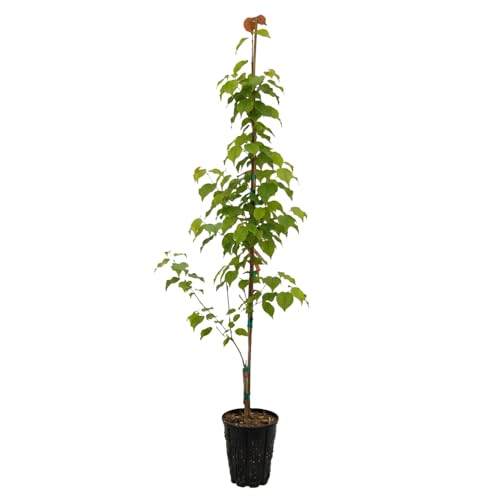
Meets Agricultural Requirements for Shipment to CA and AZ

MATURE SIZE: Compact dwarf variety that grows 6-8 feet tall and wide, perfect for creating naturally dense hedges and privacy screens.
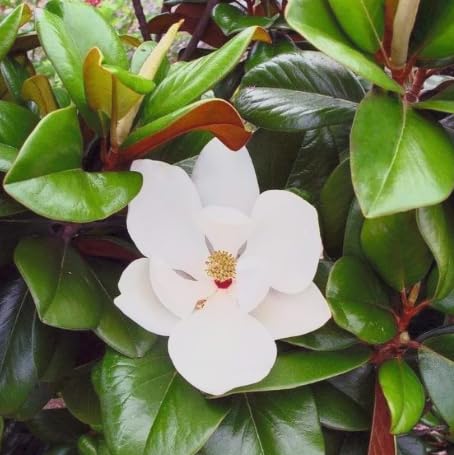
🌸 Massive Fragrant Magnolia Blooms – Large creamy white flowers appear in late spring.
Best White Flowering Trees for Different Needs
Best White Flowering Tree for Small Yards
Star Magnolia and White Redbud are excellent choices for smaller landscapes because they remain relatively compact while still producing abundant spring flowers.
Best White Flowering Tree for Shade
Flowering Dogwood and Carolina Silverbell perform well in locations that receive partial shade, making them suitable for woodland gardens.
Best White Flowering Tree for Fragrance
Japanese Snowbell and Southern Magnolia are known for their pleasantly fragrant flowers that can fill a garden with scent during bloom season.
Best White Flowering Tree for Long Blooming Periods
Natchez Crape Myrtle is often favored because its flowers can last for several weeks during the summer months.
Best White Flowering Tree for Pollinators
Flowering Dogwood, White Redbud, and Japanese Snowbell attract bees, butterflies, and other beneficial pollinators that support a healthy garden ecosystem.
Frequently Asked Questions
Do white flowering trees lose their flowers quickly?
It depends on the species and weather conditions. Some trees, such as Flowering Dogwood, may hold their blooms for only a few weeks, while varieties like Natchez Crape Myrtle can flower for much longer during the growing season.
Are white flowering trees messy?
Most white flowering trees will naturally drop petals after blooming. Some species also produce seed pods, berries, or leaves that require seasonal cleanup. Choosing a tree with smaller flowers or less fruit production can reduce maintenance.
Can white flowering trees be grown in containers?
A few compact varieties, such as Star Magnolia and some dwarf ornamental trees, can be grown in large containers for several years. However, most white flowering trees eventually require planting in the ground to reach their full potential.
Which white flowering trees are deer resistant?
While no tree is completely deer-proof, species such as Southern Magnolia and some Crape Myrtle varieties are generally less attractive to deer than tender young flowering trees.
How long does it take a white flowering tree to bloom after planting?
Many nursery-grown trees begin flowering within one to three years after planting, although this varies by species, age, growing conditions, and maintenance practices.
Can white flowering trees survive cold winters?
Many popular species, including Flowering Dogwood, Star Magnolia, and Carolina Silverbell, are well adapted to colder climates. Always check the USDA hardiness zone recommendations before planting.
Conclusion
Looking to create a colorful landscape? Pair white flowering trees with spring bulbs, flowering shrubs, and pollinator-friendly perennials to create year-round visual interest in your garden.


