


We recommend four outstanding plants that bloom nonstop in hanging baskets: Million Bells (Calibrachoa) produces countless small flowers without deadheading, wax begonias thrive in any light from full sun to deep shade, ornamental peppers add colorful interest through October, and lantana delivers continuous blooms with zero maintenance. Million Bells and lantana excel in full sun and hot locations, while wax begonias adapt to shadier spots with consistent flowering. Each variety requires basic care—daily watering when soil feels dry one inch deep and biweekly fertilization with half-strength fertilizer. Below, we’ll explore how to maximize each plant’s performance in your specific conditions.
Million Bells: The Ultimate Low-Maintenance Trailing Bloomer
Million Bells, also known as Calibrachoa, earn their name from the incredible number of small, bell-shaped flowers they produce throughout the growing season. These trailing plants bloom continuously from spring to fall without requiring deadheading, making them perfect for busy gardeners.
We’ll find them in vibrant colors including yellow, orange, red, purple, and blue. Their slow root growth means they’ll perform beautifully in large baskets for months.
Million Bells thrive in full sun and handle wind exposure remarkably well. They’ll also maintain consistent blooms in partial shade, giving us flexibility in placement throughout our outdoor spaces. For a stunning vertical display, consider pairing them with large outdoor planters that showcase their cascading growth habit.
Recommended Products

GENEROUS QUANTITY: Package includes 1500 verbena seeds, providing ample supply for multiple containers, hanging baskets, and small garden spaces throughout your growing season

2026 Upgraded Set: The artificial hanging flowers for outdoors hyacinth + boston fern set includes: 1 hanging baskets for plants outdoor, 1 artificial grass net, 1 foam, 9 stems of 189 flower heads (3 colors: fuchsia, pink, purple), with boston ferns; Each flower stem: about 13*7*7 inches; Total: 189 blooms, 216 leaves including boston ferns

Easy to grow Zones 3-11 Perennial
Wax Begonia for Continuous Color in Any Light

While Million Bells excel in sunny spots, Wax Begonias give us reliable blooms in nearly any light condition, from deep shade to blazing sun. Their waxy leaves support dense canopies of red, salmon, pink, or white flowers that bloom continuously without deadheading.
We’ve found they adapt remarkably well to temperature extremes, performing equally in hot, full-sun locations and cool, shaded areas under pavilions. For budget-conscious gardeners, they’re economical and widely available at garden centers, making them perfect for DIY basket projects.
Their versatility means we can plant them anywhere and expect consistent color throughout the season. For a more permanent display, consider pairing them with stone resin planters that complement their elegant blooms while providing excellent durability.
Ornamental Peppers That Last Into Late Fall

When we’re looking for hanging basket plants that perform well into autumn, ornamental peppers offer something entirely different from traditional flowers. Varieties like Sangria produce purple peppers that turn fiery red by late fall, while Chili-Chili displays yellow, orange, and red peppers simultaneously.
These plants excel in hot, full sun conditions without wilting during midday heat, making them extremely low-maintenance. The bright green foliage provides excellent contrast to the colorful peppers, creating visual interest through October.
Unlike traditional blooming plants that fade in late summer, ornamental peppers actually improve as temperatures cool, giving you extended value in your hanging baskets. For gardeners looking to extend their pepper growing season even further, consider transplanting them into metal raised beds where they can continue producing well into cooler weather with better soil drainage and temperature control.
How to Choose the Right Hanging Basket Plant for Your Climate?

Your local climate conditions play the most important role in determining which hanging basket plants will thrive throughout the growing GetComponent season.
We’ve found that matching plants to your specific environment guarantees continuous blooms without constant maintenance.
Climate Matching Guidelines:
- Full sun locations – Choose Million Bells or ornamental peppers, which withstand intense heat and don’t wilt during midday temperatures
- Partial shade areas – Select wax begonias, which perform equally well in cooler, shaded spots under pavilions or trees
- Windy exposures – Plant Million Bells on driveway posts or open areas where wind resistance matters most
- Extended season displays – Use ornamental peppers for late-season color lasting into October
When planning the area beneath your hanging baskets, consider using gravel stabilizers to create a clean, defined space that prevents weeds and maintains the visual appeal of your outdoor display.
Recommended Products

NATURAL & EFFICIENT: Made from 100% natural coconut fiber, coconut liners retain moisture while providing drainage and aeration.

Includes 5- 10" Baskets with Wire Hangers
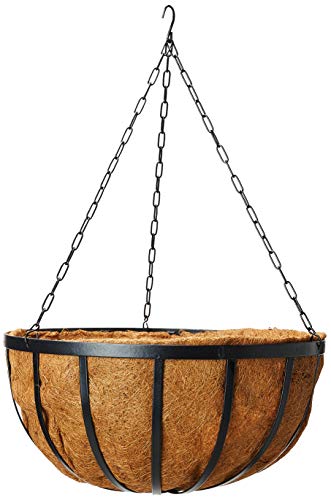
NATURAL & EFFICIENT: Made from 100% natural coconut fiber, coconut liners retain moisture while providing drainage and aeration
Watering and Fertilizing for Nonstop Blooms All Season

Consistent watering and proper fertilization determine whether your hanging basket plants produce continuous blooms or fade halfway through summer. We recommend watering daily during hot weather, checking soil moisture by inserting your finger one inch deep. If it feels dry, water until liquid drains from the bottom.
Feed your plants every two weeks with a balanced, water-soluble fertilizer mixed at half strength to prevent nutrient burn.
Million Bells, Wax Begonias, and Ornamental Peppers especially benefit from this feeding schedule, which sustains their nonstop flowering performance.
Container plants need more frequent feeding than garden beds because water flushes nutrients through drainage holes. For gardeners seeking to reduce daily watering tasks, installing an automatic drip irrigation system ensures consistent moisture delivery while conserving water and time.
Best Container Sizes for Long-Lasting Hanging Basket Performance

The right container size makes the difference between plants that thrive all season and those that struggle by midsummer, requiring you to match basket diameter with root system needs.
Container Size Guidelines:
- 10-inch baskets work for single plants or short-season displays, but require frequent watering and fertilizing
- 12 to 14-inch baskets provide ideal performance for most varieties, allowing adequate root development and moisture retention
- 16-inch or larger baskets accommodate slow-rooting plants like Million Bells for months without replacement
- Depth matters equally, with 8 to 10 inches minimum supporting healthy root systems and reducing daily maintenance
For elevated visual appeal and superior durability, consider outdoor copper planters that add a sophisticated design element while providing excellent growing conditions for your hanging basket plants.
Recommended Products

2-PACK SET: 12 Inch, large size. Pick the right size for your plants to prevent unpleasant experience and potential wastage on resources. Flowers and Plants are NOT included. These metal hanging planters are ready to hang with hanging chain and hook. Assembly not required.
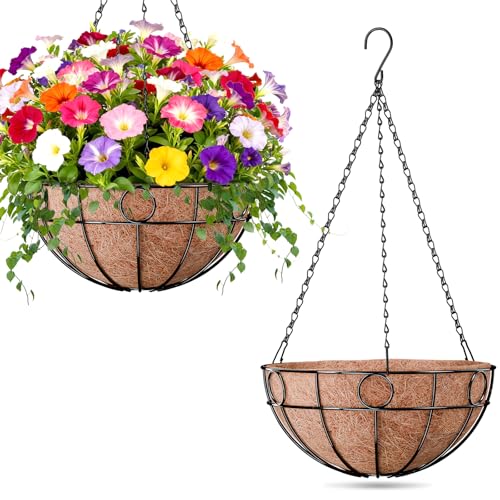
Double-Hoop hanging basket Set: Includes 2 large 12" hanging baskets with cior liners, hanging chains & hooks. Each basket measures 5.1" deep, providing ample space for plant growth.

【Self Watering Design】The innovative recessed saucer under each hanging planter which serves as a reservoir for consistent watering ensuring consistent moisture without overwatering.
Full Sun vs. Shade: Where Each Plant Performs Best

When selecting placement for hanging baskets, understanding each plant’s light requirements prevents disappointing results and guarantees continuous blooms throughout the growing season.
Million Bells thrive in full sun, withstanding wind exposure on open locations like driveway posts, though they’ll still perform in partial sun with consistent flowering.
Wax Begonias adapt to both extremes, blooming reliably in shaded areas under pavilions or in hot, full-sun spots.
Ornamental Peppers require full sun for maximum color development, remaining sturdy during intense mid-day heat without wilting.
Matching plants to your available light conditions assures peak performance from spring through fall. For larger indoor spaces with bright natural light, consider transitioning seasonal bloomers into oversized indoor planters where they can continue flowering indoors.
Which Hanging Basket Plant Is Right for Your Space?

How do you decide which of these three flowering plants fits your hanging basket needs? We recommend matching each plant to your specific growing conditions, maintenance preferences, and desired visual impact for best results.
Selection Guide by Growing Conditions:
- Million Bells – Choose for full sun locations needing zero-maintenance color from spring through fall
- Wax Begonia – Select for versatile performance in both full sun and shaded areas with continuous blooms
- Ornamental Peppers – Pick for hot, exposed locations requiring late-season color and exceptional heat tolerance
- Budget-Conscious – Plant wax begonias yourself for economical baskets
Frequently Asked Questions
Can I Mix Multiple Types of Plants in One Hanging Basket?
Yes, you can mix multiple plants in one basket. We recommend combining varieties with similar light and water needs, like pairing Million Bells with Wax Begonias in partial sun, ensuring they’ll thrive together throughout the season.
How Do I Overwinter Hanging Basket Plants Indoors?
Better safe than sorry when protecting plants from frost. We bring baskets indoors before temperatures drop, trim them back, reduce watering, and place them near bright windows where they’ll receive adequate light through winter.
What Pests Commonly Affect Hanging Basket Plants and How to Treat Them?
Aphids, spider mites, and whiteflies commonly attack hanging baskets. We treat them by spraying plants with insecticidal soap or neem oil, ensuring we coat leaf undersides thoroughly. For severe infestations, we’ll use systemic insecticides following label directions.
When Is the Best Time to Plant Hanging Baskets in Spring?
We plant our hanging baskets after the last frost date in spring, typically mid-May in most regions. This timing guarantees the soil has warmed enough and eliminates frost risk that could damage tender plants.
Do Hanging Basket Plants Need Special Potting Soil or Regular Mix?
Think of potting soil as a lightweight cushion that keeps roots breathing. We always use a quality potting mix for hanging baskets—it’s lighter than garden soil, drains better, and won’t compact or weigh down your baskets.
Conclusion
We’ve shown you the plants that deliver nonstop blooms, proper care techniques, and how to match varieties to your specific conditions. Remember, the proof is in the pudding—these selections work because we’ve tested them in real-world settings year after year. Start with one or two baskets this season, follow our watering and fertilizing guidelines, and you’ll quickly see why these varieties outperform traditional options that fade by midsummer.


