


Rubber plants can transform your home with their glossy foliage and easy-care nature. Popular varieties include the classic Burgundy with deep red-green leaves, variegated Tineke with cream-green marbling, and compact Melany perfect for small spaces. For dramatic impact, try the Black Prince with nearly-black leaves or the Ruby with pink-green variegation. These plants thrive in bright indirect light with watering only when the top inch of soil dries. Discover which stunning variety matches your space and style.
Key Takeaways
- Rubber plants offer stunning varieties from classic deep green to variegated pink, cream, and burgundy foliage that instantly enliven spaces.
- Low-maintenance varieties like Ficus elastica ‘Robusta’ and ‘Burgundy’ thrive with minimal care, making them perfect for beginners.
- Compact options such as Melany Rubber Plant work beautifully in small spaces while maintaining the dramatic appeal of larger varieties.
- Most rubber plants purify indoor air while requiring only moderate watering when the top inch of soil dries out.
- Variegated varieties like Tineke, Ruby, and Belize add visual interest with marbled patterns and vibrant color combinations.
Ficus Elastica Burgundy: The Classic Rubber Plant

Elegance and simplicity define the Ficus elastica Burgundy, often called the classic rubber plant.
You’ll love its striking, glossy leaves that range from deep green to rich burgundy.
This hardy houseplant thrives in bright, indirect light and requires watering only when the top inch of soil dries out.
It’s perfect for beginners, growing steadily with minimal fuss while purifying your indoor air. Additionally, it appreciates well-draining soil to prevent root rot, ensuring a healthy growing environment.
Ruby Rubber Plant (Ficus Elastica ‘Ruby’)

While the classic Burgundy variety offers timeless appeal, the Ruby Rubber Plant (Ficus elastica ‘Ruby’) brings a splash of vibrant color to your home collection.
Its striking variegated leaves display a mix of green, cream, and pink tones that brighten any space.
You’ll find this variety needs similar care to other rubber plants—moderate watering, bright indirect light, and occasional fertilizing during growing seasons. To ensure its health, remember to master the watering routine as overwatering can lead to root rot.
Recommended Products
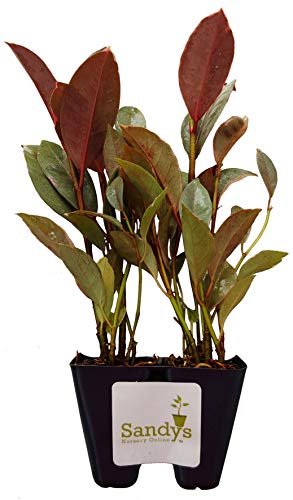
Ficus elastica "Ruby" Variegated Rubber Tree ~Lot of 2~ Starter Plants

moderate light - can thrive in a low to moderate indoor or outdoor enviroment, though to heighten the variegation you need bright light

STUNNING TRICOLOR VARIEGATION: The 'Ruby' rubber tree features thick, glossy leaves in a beautiful mix of green, cream, and vibrant pink/red. New leaves emerge with intense color before maturing.
Tineke Rubber Plant: Cream and Green Elegance

The Tineke Rubber Plant stands out as a stunning variegated variety, boasting marbled cream and green foliage that creates a sophisticated statement in any room.
You’ll find it’s slightly pickier than solid green varieties, requiring bright, indirect light to maintain its striking variegation. Additionally, proper watering frequency is essential to ensure your plant thrives, as water should be given when the top inch of soil dries out, and keep it away from drafts.
Recommended Products
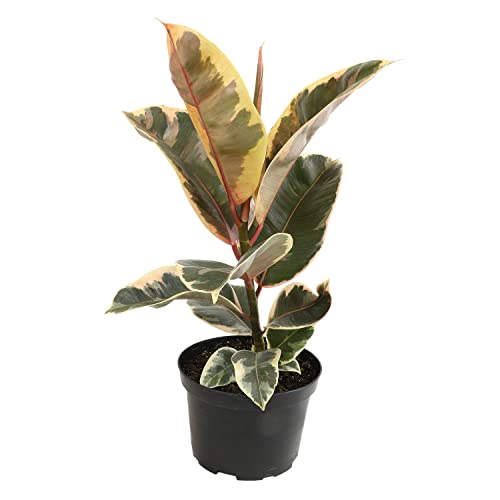
REAL PLANTS: Each order includes a 'Tineke' Ficus plant in a 6 inch plant pot. The beloved rubber plant is an exciting addition to your home, office, or balcony decor. Showcase as a desk plant for office desk decor, or near your favorite patio plants.
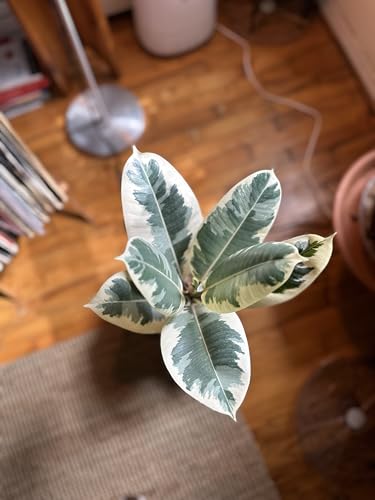
Striking Variegated Leaves – The Ficus Tineke features creamy white, soft green, and blush-pink tones, making it a standout piece in any plant collection. Air-Purifying Powerhouse – Helps filter indoor air naturally while adding beauty to your home or office. Easy-Care Rubber Plant – Thrives in bright, indirect light and prefers light watering, making it beginner-friendly.

TRENDY LIVE FICUS PLANT: A colorful, low-maintenance house plant and office plant that's easy to grow
Ficus Elastica ‘Robusta’: The Bold Statement Maker

Among all rubber plant varieties, Ficus elastica ‘Robusta’ lives up to its name with exceptionally large, thick leaves that command attention in any space.
You’ll appreciate its resilience and minimal care needs—simply place it in bright, indirect light and water when the top inch of soil dries out.
Its striking, glossy foliage grows up to 12 inches long, making it perfect for empty corners. Additionally, this plant is a great choice for beginners due to its low-maintenance care requirements, helping new gardeners build confidence.
Black Prince Rubber Plant: Dark and Dramatic

For plant enthusiasts seeking dramatic flair, Black Prince rubber plants offer a stunning alternative to traditional green varieties with their deep burgundy, nearly black foliage that creates instant visual impact.
- Prefers bright, indirect light but tolerates low light conditions
- Requires watering only when the top inch of soil feels dry
- Grows well in standard potting mix with added perlite for drainage
- Regularly inspecting plants for signs of pests will help maintain their health and vibrancy.
Variegated Rubber Plant: Nature’s Artistic Canvas

Variegated rubber plants, with their stunning splashes of cream, pink, or yellow against deep green leaves, transform ordinary living spaces into botanical showcases that capture attention and admiration.
You’ll find these beauties need bright, indirect light to maintain their colorful patterns. Water them when the top inch of soil feels dry, typically every 7-10 days, and keep humidity levels above 40% for ideal growth. Proper watering practices are essential for preventing issues like root rot and ensuring the plant thrives.
Ficus Elastica ‘Doescheri’: The Painted Beauty

While many rubber plants boast impressive foliage, the Ficus elastica ‘Doescheri’ stands out with its extraordinary creamy-white and gray-green marbled leaves that create a watercolor effect in your home.
- Thrives in bright, indirect light, which enhances its variegation
- Requires watering only when the top 2 inches of soil are dry
- Maintains its compact growth habit, rarely exceeding 6 feet indoors
- This plant can also benefit from proper care to ensure it remains healthy and vibrant.
Indian Rubber Bush: A Majestic Indoor Tree

Known as the original rubber plant, the Indian Rubber Bush (Ficus elastica) commands attention with its impressive stature and glossy, leathery leaves that can grow up to 12 inches long.
You’ll find it thrives in bright, indirect light and needs watering only when the top inch of soil feels dry. Additionally, maintaining consistent humidity levels is essential for its optimal growth and overall health.
Its vertical growth habit makes it perfect for filling empty corners without taking up much floor space.
Ficus Elastica ‘Decora’: Glossy and Gorgeous

Beauty and elegance define the Ficus elastica ‘Decora,’ a popular cultivar that’s prized for its exceptionally glossy, dark green leaves with prominent veining.
You’ll find this stunning plant adds instant sophistication to any room in your home.
- Thrives in bright, indirect light with consistent moisture
- Reaches heights of 6-10 feet when grown indoors
- Requires minimal pruning, making it perfect for busy plant parents. Additionally, this plant can improve indoor air quality by enhancing air purification.
Melany Rubber Plant: Compact and Classy

The Melany Rubber Plant offers a perfect solution for plant enthusiasts who love the dramatic look of rubber plants but have limited space.
Its compact growth habit reaches only 2-3 feet tall, making it ideal for tabletops, shelves, and small corners.
You’ll appreciate its dark green, glossy leaves that maintain the classic rubber plant appeal without overwhelming your space. Additionally, this resilient plant is ideal for beginner gardeners due to its ability to thrive in low light and withstand infrequent watering.
Ficus Elastica ‘Abidjan’: The Burgundy Stunner

A striking addition to any indoor plant collection, Ficus Elastica ‘Abidjan’ captivates with its deep burgundy to almost black foliage that creates dramatic contrast in your home.
You’ll love this variety for its:
- Low maintenance needs – requires watering only when the top inch of soil dries out
- Impressive glossy leaves that grow up to 12 inches long
- Ability to thrive in medium indirect light, making it perfect for most living spaces
Belize Rubber Plant: A Tropical Treasure

Variegation enthusiasts will immediately notice the Belize rubber plant‘s stunning cream, pink, and green marbled leaves that bring tropical vibrancy to any indoor space.
You’ll find this variety thrives in bright, indirect light and prefers consistent moisture.
Keep your Belize rubber plant in well-draining soil, maintaining temperatures between 65-85°F, and watch for its distinctive new growth, which often emerges with rosy hues.
Ficus Elastica ‘Shivereana’: Golden-Splashed Foliage

While the Belize rubber plant showcases pink-tinged variegation, Ficus elastica ‘Shivereana’ offers a spectacular alternative with its golden-splashed foliage that seems to capture sunlight within each leaf.
You’ll love this variety’s distinctive features:
- Cream-yellow variegation that brightens dark corners
- Medium growth rate, reaching 5-6 feet indoors
- Less demanding light requirements than other variegated plants
Burgundy Rubber Tree: Rich Color for Modern Spaces

Many indoor plant enthusiasts consider the Burgundy Rubber Tree (Ficus elastica ‘Burgundy’) to be the perfect statement piece for modern interiors, thanks to its striking deep-colored foliage.
You’ll love how its glossy, leather-like leaves in rich burgundy-purple tones create dramatic contrast against light walls.
This variety thrives in bright, indirect light and needs watering only when the top inch of soil feels dry.
Ficus Elastica ‘Tricolor’: A Splash of Pink, Green, and Cream

The Ficus elastica ‘Tricolor’ offers a stunning alternative to its burgundy cousin with its eye-catching variegated foliage.
You’ll love how each leaf displays a beautiful mix of pink, green, and cream tones that brighten any room in your home.
- Requires bright, indirect light to maintain vibrant coloration
- Prefers consistent moisture but can tolerate brief dry periods
- Grows more slowly than solid-green varieties, reaching 4-6 feet indoors
Rubber Fig: The Low-Maintenance Superstar

Known for its remarkable resilience and adaptability, the rubber fig stands out as one of the most forgiving houseplants you’ll ever own.
It thrives in medium to bright indirect light and only needs watering when the top inch of soil feels dry.
You’ll appreciate its glossy, leathery leaves that rarely attract pests and its ability to purify indoor air efficiently.
Ficus Elastica ‘Schrijveriana’: The Rare Collector’s Gem

Among the most coveted varieties in any rubber plant collection, Ficus elastica ‘Schrijveriana’ dazzles with its uniquely variegated foliage featuring cream, pink, and green marbling patterns.
You’ll need to give this rare beauty special attention to maintain its striking colors.
- Place in bright, indirect light to preserve variegation
- Water only when the top inch of soil feels dry
- Maintain humidity above 50% for ideal growth
Midnight Rubber Plant: Deep and Mysterious

Dramatic in both appearance and presence, Ficus elastica ‘Burgundy’ (commonly called the Midnight Rubber Plant) captivates with its deep, almost black foliage that adds a touch of mystery to any indoor space.
You’ll find it thrives in bright, indirect light, developing its richest color when properly lit.
Water when the top inch of soil dries, and maintain moderate humidity for best results.
Ficus Elastica ‘Sophia’: Petite and Perfect

While the Midnight Rubber Plant makes a bold statement with its dark foliage, the Ficus Elastica ‘Sophia’ offers a rejuvenating alternative for those with limited space.
This compact variety reaches only 2-3 feet tall, making it perfect for tabletops or shelves.
- Requires moderate watering once weekly
- Thrives in bright, indirect light
- Features variegated cream-and-green leaves that add texture
Ruby Ficus: Red-Tinged Wonder

The Ruby Ficus stands out in any collection with its striking burgundy-red leaves that create a warm, dramatic focal point in your home.
You’ll find this variety thrives in bright, indirect light with weekly watering. Its red-tinged foliage intensifies with proper light exposure, making it perfect for adding a pop of color to neutral spaces.
Ficus Elastica ‘Teneke’: Marbled Magnificence

A stunning statement piece for your home, Ficus Elastica ‘Teneke’ showcases eye-catching variegated leaves with creamy white, gray-green, and dark green marbling.
You’ll find this variety easy to care for with these key benefits:
- Thrives in bright, indirect light
- Requires watering only when soil is dry to touch
- Grows upright, saving floor space while making a dramatic vertical impact
Rubber Tree ‘Altissima’: The Towering Beauty

Reaching impressive heights of up to 100 feet in its natural habitat, Rubber Tree ‘Altissima’ brings dramatic vertical appeal to spacious homes and offices.
You’ll appreciate its glossy, elongated leaves and strong upright growth pattern.
Place it in bright, indirect light, water when the top inch of soil dries out, and rotate monthly for even growth.
Frequently Asked Questions
Can Rubber Plants Cause Allergic Reactions in Pets or Children?
Yes, rubber plants can cause allergic reactions in pets and children.
Their sap contains latex, which may trigger skin irritation or digestive upset if ingested. If you’ve got curious pets or little ones, you’ll want to place your rubber plant out of reach.
Watch for symptoms like rashes, vomiting, or difficulty breathing after contact. You’re better safe than sorry, so consider pet-friendly alternatives if allergies are a concern.
How Toxic Are Rubber Plant Leaves if Accidentally Ingested?
Rubber plant leaves are mildly to moderately toxic if ingested.
You’ll want to keep them away from curious children and pets, as they contain a milky sap called latex that can cause digestive upset, including vomiting and diarrhea.
If someone accidentally eats a leaf, rinse their mouth with water, monitor for symptoms, and call Poison Control at 1-800-222-1222 if you notice severe reactions or difficulty breathing.
Do Rubber Plants Help Purify Indoor Air Effectively?
Yes, rubber plants do purify indoor air effectively. NASA research found that rubber plants remove up to 67% of formaldehyde from enclosed spaces within 24 hours.
You’ll benefit from their ability to absorb common toxins like benzene and trichloroethylene through their broad leaves.
While not the most efficient air purifier among houseplants, they’re still effective, especially when you maintain several plants in rooms where you spend most time, like bedrooms and living areas.
Can Rubber Plants Survive in Bathrooms With High Humidity?
Yes, rubber plants thrive in bathrooms with high humidity!
Their tropical origins make them well-suited for moist environments, as long as they receive adequate indirect light.
You’ll find they actually enjoy the steamy conditions, which mimic their natural habitat.
Just verify your bathroom has a window for some light, and don’t overwater since the ambient moisture already helps keep the soil damp.
Monitor for leaf droop, which indicates adjustment needs.
How Do You Propagate Rubber Plants From Leaf Cuttings?
You’d think propagating rubber plants from leaf cuttings would be easy, but sadly, it’s not possible.
Unlike some houseplants, rubber plants won’t grow from single leaves. Instead, you’ll need stem cuttings with at least one leaf attached.
Take a 4-6 inch cutting with 1-2 leaves, remove the bottom leaf, dip the cut end in rooting hormone, and plant in moist soil.
Keep humid and warm until roots develop in 3-4 weeks.
Conclusion
You’ve now discovered several stunning rubber plant varieties to bring natural beauty into your home. Did you know that rubber plants can improve indoor air quality by removing up to 30% of toxins from your environment? Whether you choose the dramatic Black Prince or the elegant Tineke, these low-maintenance beauties will thrive with proper care. Place your new rubber plant in bright, indirect light, water when the soil dries out, and enjoy watching it grow.


