


You’ll transform your space with DIY tiered plant stands ranging from repurposed wooden ladders positioned horizontally for cascading pothos to modular PVC pipe towers for vertical gardens. Stack wooden crates in pyramid formations, construct staircase designs with progressive elevation zones, or reimagine old furniture pieces as multi-level displays. Metal pipe stands offer contemporary aesthetics, while salvaged pallets provide inherent drainage for moisture-loving plants. Each configuration maximizes vertical real estate while creating distinct microclimates for your collection’s diverse light and humidity requirements—all achievable with basic tools and materials you likely already have.
Key Takeaways
- Wooden ladder, staircase, and crate stands create vertical tiers with distinct elevation zones for varied plant light requirements.
- Metal pipe and floating shelf stands offer modern, space-efficient designs with adjustable tier spacing for optimal plant growth.
- Recycled tires and pallets provide budget-friendly tiered options with excellent drainage for both vegetables and ornamental plants.
- PVC pipe stands deliver customizable, weather-resistant frameworks ranging from simple towers to complex multi-tier configurations.
- Cinder block stands use modular stacking with wooden planks, allowing vertical expansion as plant collections grow.
Old Wooden Ladder Plant Stand
An old wooden ladder offers instant vertical dimension while celebrating the beauty of weathered wood.
Position it horizontally against a wall or fence, securing each rung to create stable shelves for your potted plants. This approach to lifestyle gardening transforms forgotten items into functional art.
Arrange trailing pothos on upper rungs while reserving lower levels for larger specimens like snake plants or ferns. The varied heights enable creative displays that showcase each plant’s unique growing habit.
Sand rough edges if needed, but preserve the patina—those imperfections add character.
You’ll create an organic focal point that maximizes vertical space efficiently. For gardeners seeking a more permanent solution with natural rot resistance, cedar raised garden kits offer durable construction that complements any outdoor aesthetic.
Recommended Products

VERSATILE DISPLAY: This 3-tier bamboo plant stand offers multiple levels to showcase various potted plants in your living space or outdoor garden.
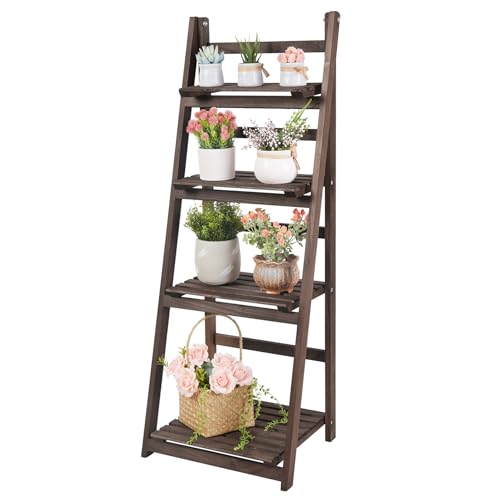
4 Tiered Tall Shelf: With the height of 110cm/43.3inches and board thickness of 16mm; This ladder plants rack can display small planter pots and succulents very nicely; besides, its 4 tiered wood shelvings also can hold your photos, books, small accents and ornaments as well

>7-Pots Plant Stand: Featuring a ladder design that allows unobstructed sunlight, this plant rack accommodates more than 7 pots, making it an ideal decorative piece for organizing your plant collection. Suitable for both indoor and outdoor use.
Staircase Plant Stand

Staircase-style plant stands bring architectural rhythm to your space through progressively ascending platforms that mirror traditional steps.
This staircase design creates distinct elevation zones, allowing you to arrange plants by light requirements—shade-lovers below, sun-seekers above. You’ll maximize vertical real estate while maintaining easy access for watering and maintenance.
The stepped configuration naturally draws the eye upward, transforming your plant display into a living focal point.
Consider constructing yours from weather-resistant cedar or pine, spacing each tier 8-12 inches apart to accommodate varied pot sizes.
Position trailing pothos or ivy on upper levels for cascading visual interest.
For dual functionality, incorporate a garden storage bench beneath the lowest tier to house potting supplies and tools while maintaining your display’s aesthetic appeal.
Recommended Products

Rich & Assorted Usage: This aesthetically-pleasing plant ladder stand can be a display stand for plants, photos, handicraft, books in the living room, patio, balcony, and also can serve as a fancy storage shelf for toiletries, towels, hats in the bathroom, hallway, bedroom, kitchen, etc

Natural beauty cedarwood stand is perfect for plant pots, balcony flower pot stand, planter saucers or holders.

[Versatile Plant Stand]: Convertible is a big plus, plant stands for indoor plants that can be two separate stands or one full stand, which is nice feature.It looks good either in a corner or on a straight wall and it's not too big that it feels in the way.
Wooden Crate Plant Stand

Wooden crates transform into adaptable plant staging through strategic stacking and orientation, offering modular flexibility that adapts to your evolving collection.
You’ll create vertical gardens by arranging crates in pyramid formations or horizontal displays for sun-loving specimens.
Sand rough edges, apply weather-resistant finishes, or embrace natural patina for authentic sustainable gardening aesthetics.
Position drainage-dependent plants in upper tiers while moisture-loving varieties occupy lower levels.
Paint crates in complementary hues for creative decor impact, or maintain raw wood tones for organic appeal.
Secure stacked configurations with corner brackets, ensuring stability for top-heavy arrangements while maintaining your design’s visual lightness.
For a more durable alternative, consider pairing wooden crates with stone resin planters that offer enhanced weather resistance while maintaining aesthetic versatility.
Recommended Products

【Package Included】You will receive 1 pack of medium size wooden plant stand in total, which can meet your different needs for various sizes flower pot, potted plants and other decorations.

DIMENSIONS - This set includes 3 nested wooden crates in large, medium, and small sizes, with clearly marked outside and inside dimensions for precise use: Large (13.0” x 9.8” x 6.6” outside / 12.5” x 8.9” x 6.5” inside), Medium (11.4” x 7.8” x 6.0” outside / 11” x 7” x 5.9” inside), Small (10.0” x 5.8” x 5.8” outside / 9.5” x 5” x 5.7” inside). With only a 1/4 inch deviation from manual measurement, the varied sizing functions perfectly for holding different-sized items, or decorative knick-knacks that require exact size matching, offering flexible storage options for all your organizing needs.

Improve hands-on ability:you can easily assemble the entire flower stand according to the instructions in the manual. Assembling products can improve your hands-on ability and let you experience the fun of assembly
PVC Pipe Plant Stand

Because PVC pipes offer unmatched customization potential, you’ll engineer plant displays that adapt to specific dimensional constraints and botanical requirements.
PVC pipe advantages include lightweight portability, weather resistance, and modular assembly—perfect for balconies with weight restrictions or seasonal garden changes. You’ll cut pipes to precise heights, accommodating trailing pothos alongside compact succulents.
PVC pipe designs range from minimalist vertical towers to complex geometric frameworks with multiple tiers. Connect elbows and T-joints to create cantilever shelves for light-demanding specimens while positioning shade-tolerant ferns below.
Spray paint transforms industrial materials into cohesive décor elements matching your existing aesthetic palette. For those seeking ready-made solutions, a vertical garden tower offers streamlined assembly with integrated irrigation systems and optimized spacing for herbs and vegetables.
Pallet Plant Stand

Transforming salvaged pallets into tiered plant stands maximizes vertical growing space while maintaining structural integrity for heavy ceramic containers and moisture-laden soil.
Your pallet repurposing starts by disassembling heat-treated wood, avoiding chemically treated varieties that leach toxins into root systems. Construct stepped shelves using horizontal slats secured at 12-inch intervals, accommodating trailing pothos alongside upright snake plants.
The pallet design inherently supports drainage with its slatted construction, preventing waterlogged conditions. Sand rough edges thoroughly before applying weather-resistant stain.
Position completed stands where weight distribution aligns with structural supports, ensuring stability as your collection expands vertically rather than consuming valuable floor area. For starting seedlings to transplant into your tiered display, consider using a soil blocking kit pro to create compact, rootbound starter plugs that transplant seamlessly without disturbing root systems.
Hanging Tiered Plant Stand

When floor space runs scarce, suspended tiered stands elevate your botanical displays through vertical planes while maintaining accessibility to each plant layer.
You’ll maximize square footage through strategic vertical gardening while creating stunning visual hierarchies with your hanging plants. These space saving solutions transform bare walls into living galleries, enhancing indoor decor with cascading greenery at staggered heights.
DIY tutorials guide you through rope-and-shelf configurations that support varied pot sizes, enabling creative displays tailored to your plant collection.
Customize rope-and-shelf systems using simple tutorials to accommodate diverse pot dimensions and showcase your unique botanical arrangement.
This approach optimizes plant organization while ensuring proper light exposure across tiers, merging functional plant aesthetics with architectural innovation. For gardeners who prefer ground-level workspaces, a stainless steel potting bench provides durable, weather-resistant functionality alongside your vertical displays.
Teacup Tiered Plant Stand

While hanging stands optimize vertical space through suspension, vintage tableware offers an entirely different approach to tiered plant displays with unexpected charm.
You’ll transform mismatched teacups and saucers into whimsical planters by stacking them along a central spindle.
Here’s your construction approach:
- Select sturdy porcelain pieces – teacup selection tips include checking for chips and ensuring adequate drainage potential.
- Drill drainage holes carefully using diamond bits to prevent cracking.
- Apply strong adhesive between layers – saucer stability techniques require epoxy-based bonding for weight distribution.
This stand accommodates small succulents, herbs, or trailing plants while adding vintage character to windowsills and tabletops.
For more serious gardening work like potting and repotting, consider upgrading to a cedar potting workstation that provides dedicated space and storage for your planting projects.
Recycled Tire Plant Stand

Upcycled tires bring bold geometry to garden spaces through their stackable circular forms. You’ll create dynamic vertical interest by arranging three to five tires in graduated sizes, painting each ring in complementary hues that enhance your plantings. This tire gardening approach suits deep-rooted vegetables like tomatoes or cascading ornamentals.
| Plant Type | Tire Position |
|---|---|
| Trailing ivy | Top tier |
| Dwarf flowers | Middle tier |
| Root vegetables | Bottom tier |
| Succulents | Any tier |
The eco friendly design transforms rubber waste into functional planters while providing excellent drainage and soil depth for robust root development. For water features integrated with your tiered gardens, consider adding an outdoor pond pump kit to create a recirculating fountain that enhances the ambiance of your plant display.
Metal Pipe Plant Stand

Industrial elegance meets botanical function when you construct a metal pipe plant stand, where galvanized steel or copper tubing forms clean geometric lines that complement both minimalist interiors and contemporary outdoor spaces.
This metal pipe framework creates vertical interest while maximizing your floor footprint.
Essential Assembly Considerations:
- Pipe Diameter Selection – Choose ¾-inch pipes for lightweight succulents, 1-inch for substantial foliage.
- Joint Configuration – Utilize flanges and tee-fittings to create stable multi-tier platforms.
- Height Proportions – Space tiers 12-18 inches apart for ideal light penetration and plant design visibility.
The finished structure accommodates cascading pothos alongside upright specimens, creating dynamic botanical compositions. For those preferring ready-made solutions, large outdoor planters offer an alternative way to display multiple plants at varying heights without construction requirements.
Floating Shelf Plant Stand

When vertical real estate becomes your primary gardening canvas, floating shelves transform bare walls into living galleries where trailing philodendrons cascade beside compact jade plants. You’ll maximize spatial efficiency while curating shelf aesthetics that complement your wall decor.
| Shelf Depth | Plant Type | Light Zone |
|---|---|---|
| 6-8 inches | Succulents | Bright indirect |
| 10-12 inches | Pothos | Medium light |
| 14+ inches | Snake plants | Low to bright |
| Variable | Mixed arrangements | Varies by species |
Install shelves at staggered heights—18 to 24 inches apart—to prevent upper plants from shading lower specimens. You’re creating dynamic compositions where architecture meets horticulture. For dedicated indoor gardeners seeking optimized growing conditions, wall mounted grow shelves provide integrated lighting and drainage systems that elevate plant health beyond standard decorative installations.
Cinder Block Plant Stand

Four concrete blocks and two wooden planks create an architectural framework that’ll support everything from hefty snake plants to cascading string-of-pearls.
This industrial design approach transforms construction materials into functional garden furniture through cinder block creativity.
Configure your stand with these spatial arrangements:
- Stack blocks two-high on each end for elevated shelf positioning
- Leave hollow centers facing upward to nestle smaller pots within the voids
- Space blocks 24-36 inches apart to accommodate standard lumber widths
Sand and seal your planks to prevent moisture damage.
The modular nature allows vertical expansion as your collection grows.
Tree Branch Plant Stand

Foraged branches from your yard or local woods bring organic architecture to plant displays while costing nothing but your time.
Select sturdy Y-shaped branches with multiple forks to cradle pots at varying heights, or lash straight limbs into tripod configurations for vertical interest. The natural aesthetics work beautifully with ferns, trailing pothos, and woodland natives that echo forest floor compositions.
Secure branches with jute twine or copper wire for rustic charm that complements ceramic or terracotta containers.
Position your stand near windows where dappled light mimics canopy conditions, creating micro-environments that celebrate biophilic design principles while showcasing your plant collection’s natural beauty.
Metal Basket Plant Stand

Wire geometry transforms everyday metal baskets into sculptural plant displays that balance industrial edge with botanical softness.
You’ll create visual rhythm by stacking varying basket sizes, letting trailing pothos cascade through open weaves while upright ferns occupy upper tiers.
Your basket design should prioritize:
- Drainage consideration – Line baskets with coco fiber or leave gaps for excess water escape
- Weight distribution – Place heavier pots on lower tiers for stability
- Strategic spacing – Allow 6-8 inches between levels for adequate growth room
This arrangement enhances plant aesthetics through intentional layering, where metallic frameworks complement rather than compete with foliage textures and colors.
Folding A-Frame Plant Stand

Three hinged panels transform a simple wooden structure into a space-efficient plant theater that adapts to your seasonal needs.
You’ll appreciate how the A-frame’s angled shelves maximize vertical space optimization while providing graduated sun exposure—perfect for arranging plants by their light requirements.
The folding mechanism lets you collapse the stand during winter months or relocate it between your balcony and living room.
This design excels at plant care flexibility, allowing you to adjust shelf heights for growing specimens.
When constructed with weather-resistant wood, it shifts seamlessly between indoor herb gardens and outdoor succulent displays, accommodating your evolving botanical collection.
Repurposed Furniture Plant Stand

Your grandmother’s abandoned side table becomes a statement piece when reimagined as a plant stand, its worn patina and existing architecture creating display opportunities new furniture can’t replicate.
Vintage aesthetics merge seamlessly with eco friendly gardening when you strategically position plants at varying heights using existing shelves and surfaces.
Consider these spatial arrangements:
- Stack trailing pothos on upper tiers with compact succulents below
- Position taller specimens toward the back, cascading varieties forward
- Utilize drawer openings as shadowed niches for ferns
The furniture’s original structure dictates plant placement—you’re working with established proportions rather than forcing artificial configurations.
Frequently Asked Questions
How Often Should I Water Plants on Tiered Stands?
Check your plants’ soil moisture every 2-3 days since top tiers dry faster than lower ones. Adjust watering frequency based on each level’s humidity levels and sunlight exposure to prevent overwatering bottom plants.
What’s the Maximum Weight Capacity for DIY Plant Stands?
Weight capacity depends on your material selection and weight distribution. Wooden stands typically support 50-100 pounds, while metal pipe designs handle 100-200 pounds. Always reinforce joints and distribute plants evenly across tiers for stability.
How Do I Prevent Water Damage to Indoor Tiered Plant Stands?
Use waterproofing techniques like sealing wood with polyurethane or marine varnish. Implement drainage solutions including saucers under pots, elevated platforms, and moisture-resistant liners. You’ll protect surfaces while maintaining proper airflow around your plants’ root systems.
Which Plants Work Best for Tiered Stand Arrangements?
Position petite plants perfectly: you’ll want succulent arrangements on top tiers where light’s brightest, while trailing vines like pothos cascade beautifully from middle shelves, creating dimensional depth and visual flow throughout your stand.
How Do I Maintain Stability on Uneven Outdoor Surfaces?
You’ll need proper leveling techniques like adjustable feet or shims beneath your stand’s legs. Consider placing stable surface materials—pavers, concrete blocks, or treated wood platforms—underneath to create an even foundation for your tiered display.
Conclusion
You’ve just proven what designers have known all along: vertical gardening isn’t about cramming more plants into tight quarters—it’s about honoring each specimen’s spatial needs while creating depth and visual rhythm. As you arrange your fiddle leaf fig on the top tier and cascade pothos below, you’ll discover the truth: thoughtfully layered plants don’t just save space; they transform flat walls into living architecture. Your DIY stand becomes the framework where light, shadow, and greenery finally dance together.


