


Hens and chicks come in 15 surprisingly different varieties. Each type offers unique colors, textures, and sizes suited for different spaces. Some varieties stay tiny and compact, while others spread wide and bold. Certain types thrive indoors, and others handle cold winters well. Knowing which variety fits a specific space makes all the difference, and what follows covers each one clearly.
Echeveria ‘Shaviana’: Delicate Frilled Leaves for Part Sun
Among the many hens and chicks varieties, Echeveria ‘Shaviana’ stands out for its delicate, frilled leaves. Its common names are Mexican Hens and Pink Frills. Those ruffled edges give it a uniquely decorative look.
This variety thrives in part to full sunlight, so placing it near a bright window or in a partially shaded outdoor spot works well. It belongs to the Echeveria genus, which includes many rosette-forming succulents.
Gardeners who want something visually distinctive will appreciate this variety. Its delicate appearance makes it a fine choice for containers, rock gardens, or sunny indoor shelves. For a sleek and modern display, planting it in a stainless steel planter box can beautifully complement its ornate, ruffled foliage.
Echeveria ‘Green Prince’: Thick, Fleshy Hens and Chicks With Vivid Green Leaves

While Echeveria ‘Shaviana’ charms gardeners with its frilly edges, Echeveria ‘Green Prince’ takes a different approach. This variety features very thick, flat, fleshy leaves in a brilliant green color. The leaves are noticeably juicy and substantial, giving the plant a bold, sturdy appearance.
Its common name is Mexican Hens and Chicks, and it shares the same easygoing nature as other Echeveria varieties. Gardeners who want a striking green centerpiece will find this plant rewarding. Its vivid color stands out in container gardens and outdoor beds, making it a reliable and visually satisfying choice for beginners and experienced growers alike. For growers cultivating this variety indoors, using LED grow light panels can help replicate the bright conditions this plant thrives in naturally.
Echeveria Elegans: A Classic Bluish-Gray Hens and Chicks for Indoors or Out

Echeveria elegans is a classic choice for good reason. Its tight, rose-shaped rosettes display a soft bluish-gray color that looks attractive in almost any setting.
The rosettes grow in a neat, compact form, and this makes them easy to place in an outdoor garden or a bright indoor spot. This variety handles different environments well, so beginners find it forgiving and manageable.
Bright light helps it maintain its best color and shape. Echeveria elegans fits naturally alongside other succulents, and its cool, muted tone provides a calm contrast to varieties with bolder, warmer colors. Monitoring the soil temperature around your succulents is made easier with a wireless soil thermometer, which helps you ensure optimal growing conditions year-round.
Echeveria ‘Black Prince’ vs. ‘Black Knight’: Color, Size, and Darkness Compared

For gardeners who love dark, dramatic succulents, the Black Prince and Black Knight are two standout choices worth knowing.
Both belong to the Echeveria family and share deep, rich coloring. The Black Prince grows 4–6 inches wide and has triangular leaves in purplish-brown shades.
The Black Knight goes even darker, displaying nearly black, deep-purple leaves. New Black Knight leaves emerge lime-green, then deepen with age.
Both varieties rank among the darkest Echeveria types available. Gardeners who want dramatic contrast will find either variety rewarding, depending on how dark they want their display to go. Displaying these dark succulents in oversized indoor planters can amplify their visual impact and create a striking focal point in any room.
Recommended Products

Black Echeveria Succulent – Live Rose Aeonium black succulent plant in a 2-inch pot, perfect for succulent collections and modern home décor.

Succulent is a unique houseplant that will transform in color under different lighting conditions

Easy Care & Drought-Tolerant Succulent: Echeveria Rob Roy is a low-maintenance succulent. Water only when the soil is completely dry. Ideal for beginners or busy plant owners looking for an easy indoor plant
Echeveria Secunda: Hardy Hens and Chicks With Yellow and Red Summer Flowers

Dark varieties like the Black Prince and Black Knight have strong visual appeal, but not every gardener wants deep, moody colors. Echeveria secunda offers something brighter and more welcoming.
Its rosettes grow up to five or six inches wide, making it a solid, noticeable plant. It is very hardy and quite common, so beginners can grow it with confidence.
Each summer, it produces yellow and red flowers that add cheerful color to any garden or bright indoor space. Its reliability makes it a practical choice, and its seasonal blooms give gardeners something to look forward to each year. When watering this variety, using a stainless steel watering can gives you precise control over water flow, helping to keep moisture away from the center of the rosette where rot can develop.
Recommended Products

CREATE YOUR PLANT SANCTUARY: Create the Indoor or Outdoor Space of Your Dreams with Relaxing & Peaceful Echeveria Succulent Plants.

Echeveria 'Fiona' - A lovely medium succulent with neat, compact rosettes of thick, obovate, fleshy leaves. The foliage ranges from silvery blue to lavender and soft purple, coated in a fine white farina, blushing bright pink and red at tips and margins in full sun and cool temperatures. This hardy hybrid offsets freely to form beautiful clusters, matures to 12–18 cm wide, and blooms with small orange bell-shaped flowers in late spring to early summer

Echeveria Lola - Echeveria 'Lola' is a gorgeous hybrid of the cross E. lilacina x E. 'Deresina'. Echeveria Lola’s leaves are a delicate shade of light purple or may appear to be a mix of gray and blue hues. Her leaves grow in the shape of a rosette. Its thick layer of farina gives this sturdy rosette the appearance of pearlescent marble with rosy, blushing undertones
Sempervivum ‘Sugar Shimmer’ and ‘Cosmic Candy’: Cobweb Hens and Chicks

Among the more eye-catching Sempervivum varieties, ‘Sugar Shimmer’ and ‘Cosmic Candy’ stand out for their unique textures and colors. ‘Sugar Shimmer’ has hairy tips and shifts from blue-green to soft pink. ‘Cosmic Candy’ stays red with a white cobweb-like center, making it a rare find. These varieties look stunning when displayed in large outdoor planters that complement their compact rosette forms.
Hairy tips and cobweb centers make ‘Sugar Shimmer’ and ‘Cosmic Candy’ two of the most visually striking Sempervivum varieties available.
Key highlights of these two varieties:
- Both grow in dense rosettes
- ‘Sugar Shimmer’ changes color over time
- ‘Cosmic Candy’ belongs to the rare cobweb type
- Hairy and webbed textures add visual interest
- Both offer year-round appeal in gardens
Sempervivum ‘Appletini’ and ‘Mint Marvel’: Green Rosettes With Deep Red Tips

Two more Sempervivum varieties worth knowing are ‘Appletini’ and ‘Chick Charms Mint Marvel.’ Appletini is a hardy variety with a bright green apple-colored center and deep wine-colored tips. It earns the common name Hens and Chicks through its reliable spreading habit.
Mint Marvel forms tight, tiny rosettes with rich green leaves and red tips, and it produces purple star-shaped flowers. Both varieties offer striking color contrast in green and red tones. They work well in garden beds or containers, and their bold coloring makes them easy to identify and enjoyable to grow. For a durable and decorative display, stone resin planters provide an attractive way to showcase these colorful rosettes.
Sempervivum ‘Fashion Diva’ and ‘Chocolate Kiss’: Tiny vs. Large Hens and Chicks

When it comes to size, ‘Fashion Diva’ and ‘Chocolate Kiss’ sit at opposite ends of the spectrum. ‘Fashion Diva,’ also called Chick Charms Strawberry Kiwi, grows bright red rosettes just 2–4 inches wide. ‘Chocolate Kiss’ produces dark burgundy-brown rosettes reaching 10–12 inches across.
Here are five key facts about both varieties:
- ‘Fashion Diva’ stays small and compact
- ‘Chocolate Kiss’ spreads wide like a dinner plate
- Both belong to the Sempervivum tectorum family
- ‘Chocolate Kiss’ displays a rich chocolate-brown shade
- Both work well in garden borders
Both varieties look stunning when displayed in premium terracotta pots that complement their natural earthy tones.
Sempervivum ‘Gold Nugget’ and ‘Watermelon Ripple’: Contrasting Foliage Hens and Chicks

Gardeners who enjoy bold color contrasts will find ‘Gold Nugget’ and ‘Watermelon Ripple’ especially rewarding.
‘Gold Nugget’ stands out as the first Sempervivum with true gold-colored foliage, and its leaves develop deep pink edges that sharpen the golden tones nicely. It grows reliably across USDA hardiness zones 3 through 9.
‘Watermelon Ripple’ takes a different approach, featuring dark red-burgundy centers with light green tips. Its color pattern runs opposite to most varieties.
Together, these two plants create striking visual contrast, and pairing them in a garden bed or container highlights each one’s unique coloring beautifully. For gardeners who also appreciate decorative garden accents, a brass garden sundial can complement these bold foliage colors and add timeless charm to the same planting space.
Sempervivum ‘Cherry Berry’ and ‘Cinnamon Starburst’: Seasonal Color-Changing Varieties

Among the most expressive Sempervivum varieties, ‘Cherry Berry’ and ‘Cinnamon Starburst’ both shift their colors noticeably as the seasons change.
‘Cherry Berry’ starts with a green base and develops bright cherry red rosettes during spring and summer. In fall and winter, it turns green with red streaks. ‘Cinnamon Starburst’ has a leopard-like look, showing dark green centers with purple-red spots on its tips.
Key traits to know:
- Cherry Berry turns cherry red in spring and summer
- Cherry Berry shows green with red streaks in cooler months
- Cinnamon Starburst displays dark green centers year-round
- Purple-red spots appear on Cinnamon Starburst’s leaf tips
- Both varieties reward patient gardeners with changing seasonal displays
Displaying these colorful rosettes on a decorative plant stand wood can elevate their visual impact and make their seasonal color changes even more striking indoors.
Sempervivum ‘Emily’ and S. Ciliosum: Cobweb and Hairy-Textured Hens and Chicks

Seasonal color shifts make some hens and chicks hard to miss, but texture is what sets the next group apart.
Sempervivum arachnoideum ‘Emily’ grows distinct white cobweb-like centers that cover its rosettes. The effect looks delicate but the plant stays tough.
Delicate-looking but remarkably tough, this variety wraps its rosettes in striking white cobweb-like centers.
Sempervivum ciliosum, called the Teneriffe Houseleek, grows grey-green pointed leaves covered in fine hair. It reaches 4–8 inches tall and spreads 14–20 inches wide.
Both varieties thrive in full light, which helps their unique textures stand out. Gardeners who want interesting detail without relying on color will find these two varieties genuinely rewarding choices.
Sempervivum ‘Greenii’ and ‘Killer’: Mat-Forming Hens and Chicks in Green and Red

Texture and color-contrast make Sempervivum ‘Greenii’ and Sempervivum ‘Killer’ a natural pair worth growing together. ‘Greenii’ forms tight, mat-like clusters of grey-green to blue-grey leaves, and each leaf tip is finished in red or maroon.
‘Killer’ stays small but delivers seasonal bursts of deep red to mahogany across its olive-green rosettes.
Key traits of both varieties:
- ‘Greenii’ spreads in dense, mat-forming patches
- ‘Killer’ produces compact olive-green rosette clusters
- Both display red tones seasonally
- Color intensity shifts with temperature and light
- Together, they create strong visual contrast in garden beds
Sempervivum ‘Jade Rose’ and ‘Corsair’: Jewel-Toned Rosettes for Bright Indirect Light

For gardeners who want jewel-toned color without harsh direct sun, Sempervivum ‘Jade Rose’ and Sempervivum ‘Corsair’ are two varieties worth considering.
‘Jade Rose’ forms rosettes in light green and purple, and it prefers bright indirect sunlight in cooler conditions.
‘Corsair’ grows in small mound-forming clusters, and its leaves emerge green before maturing to a deep pink-red.
Both varieties reward patient growers with rich, shifting color.
Placing them near a bright window works well.
Their compact sizes make them easy to manage, and their color development makes them visually rewarding choices for indoor or sheltered outdoor spaces.
Sempervivum ‘Purple Haze’ and Echeveria ‘Violet Queen’: Purple-Toned Compact Varieties

Both Sempervivum ‘Purple Haze’ and Echeveria ‘Violet Queen’ bring rich purple tones and compact growth to any collection.
‘Purple Haze’ forms rosettes that reach 4 to 6 inches across, and its round, flat leaves are gray-green with a purple hue and pointed tips. ‘Violet Queen’ offsets into dense mounds 4 to 6 inches tall, showing silver-green leaves with soft pink margins.
Key traits worth noting:
- ‘Purple Haze’ stays compact and tidy
- ‘Violet Queen’ spreads into full mounds naturally
- Both display distinct purple coloring
- Silver-green hues complement pink and purple tones
- Both suit bright indirect light well
Sempervivum ‘Andrenor,’ ‘Oddity,’ and More Rare Hens and Chicks Worth Growing

Among the rarer varieties, Sempervivum ‘Andrenor,’ ‘Oddity,’ and a few others offer some truly distinctive looks.
‘Andrenor’ stands out with narrow bright green foliage that is heavily backed and tipped with intense red, making it a striking contrast plant.
‘Oddity’ grows in a mat of small rosettes, and its blue-green leaves carry purple tips that add quiet visual interest.
‘Cebenese’ produces pale green rosettes covered in delicate white cobwebs, and ‘Cmiral’s Yellow’ shifts from pale green to bright yellow depending on growing conditions.
These varieties reward growers who enjoy subtle but genuinely eye-catching foliage differences.
Recommended Products
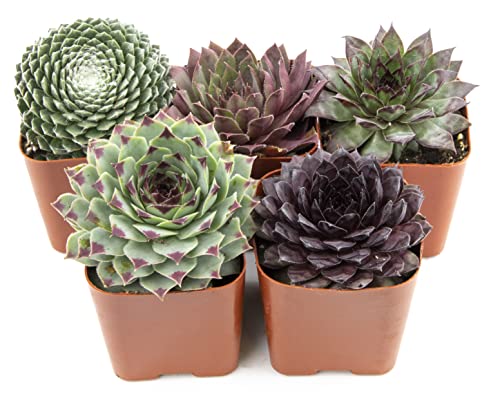
An assortment of live succulents featuring 5 Sempervivum plants. These low light plants are fantastic plant decor for bedroom spaces, plus they’re hardy office plants and desk plants.

HAND SELECTED SEMPERVIVUM SUCCULENTS: Growing succulent seeds is a hassle — our live plants are FULLY ROOTED IN 2 INCH SUCCULENT POTS, similar in size to the succulent planter in photo 2.
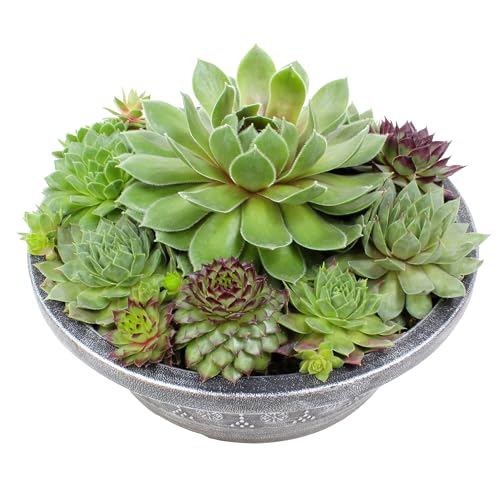
LIVE SUCCULENTS PLANTS: An 8" succulent bowl planter featuring fun succulents. These easy care plants are great for decorating, gifting, and beyond.
Frequently Asked Questions
How Often Should Hens and Chicks Be Watered to Prevent Overwatering?
Hens and Chicks should be watered every 1–2 weeks during growing season and reduced to monthly in winter. Soil must dry completely between waterings to prevent root rot and overwatering damage.
Can Hens and Chicks Survive Freezing Winter Temperatures Outdoors?
Sempervivum ‘Gold Nugget’ thrives in USDA zones 3–9, confirming that many hens and chicks varieties endure freezing winters outdoors. These hardy succulents tolerate harsh cold, making them reliable year-round garden plants in most climates.
How Do You Propagate Hens and Chicks From Offsets or Cuttings?
Hens and chicks propagate naturally through offsets, or “chicks,” which form around the mother plant. These small rosettes are gently separated and replanted in well-draining soil, where they quickly establish independent root systems with minimal care required.
What Soil Mix Is Best for Growing Hens and Chicks Successfully?
Though some assume rich soil is better, hens and chicks thrive in fast-draining, gritty mixes—ideally combining coarse sand, perlite, and minimal organic matter—preventing root rot while supporting their hardy, drought-tolerant nature.
Do Hens and Chicks Die After Flowering, and What Happens Next?
Yes, the hen plant dies after flowering — a process called monocarpic death. The surrounding chicks (offsets) survive and fill the gap, continuing the colony’s growth and ensuring the plant’s natural propagation cycle persists.
Conclusion
Hens and chicks are like a painter’s palette, offering endless color, texture, and form. Gardeners can find the right variety for nearly any space, from tiny containers to wide rock gardens. Compact types suit small areas, while spreading varieties fill larger spots naturally. Each plant produces cheerful offsets that expand the collection over time. Starting with one or two favorites makes building a beautiful, low-maintenance display simple and rewarding.


