


We’ve found that vinegar eliminates weeds naturally by using acetic acid to break down plant cell membranes and draw moisture from leaves. For best results, we recommend horticultural vinegar with 20-30% acidity rather than household vinegar’s 5%, which won’t effectively kill mature weeds. Apply full-strength vinegar directly on stubborn weeds during sunny afternoons, and you’ll see browning within 8-12 hours. Always wear protective gloves and goggles when handling horticultural vinegar, and keep pets away until the solution dries. We’ll show you exactly how to mix, apply, and protect your garden throughout this process.
Key Takeaways
- Use horticultural vinegar with 20%-30% acidity for effective weed control, as household vinegar’s 5% acidity is insufficient.
- Apply vinegar in mid to late afternoon on sunny days when heat amplifies effectiveness, causing visible results within 8-12 hours.
- Spray full-strength vinegar directly onto mature weeds and dilute to 15% acidity for small, young weeds.
- Wear protective goggles and gloves when handling horticultural vinegar to prevent burns from its high acidity.
- Avoid spraying desirable plants and reapply as necessary for persistent weeds while maintaining proper plant spacing.
Why Vinegar Works as a Natural Weed Killer

While most commercial herbicides rely on synthetic chemicals to kill weeds, vinegar works through a completely natural process that targets the plant’s cellular structure.
The acetic acid in vinegar draws moisture from plant leaves, causing cells to dry out and die. This process, called desiccation, happens quickly when the vinegar makes direct contact with foliage.
The acid also breaks down cell membranes, which prevents plants from regulating water and nutrients. Higher acidity levels penetrate deeper into plant tissue, making horticultural vinegar far more effective than standard household varieties for killing weeds down to their roots. Additionally, utilizing natural pest control methods in conjunction with vinegar can enhance overall garden health and reduce reliance on chemical treatments.
The Difference Between Standard and Horticultural Vinegar

Understanding how vinegar kills weeds naturally leads us to an important question: which type of vinegar should you actually use?
Standard household vinegar contains only 5% acidity, which isn’t strong enough to kill weeds down to their roots.
Horticultural vinegar, however, ranges from 20% to 45% acidity, making it far more effective for weed control.
We recommend using 30% strength horticultural vinegar, like Calyptus brand, for best results.
You can dilute this stronger vinegar for smaller weeds or use it full strength on stubborn problems.
This higher acidity guarantees complete weed elimination, similar to the way organic mulching protects soil and suppresses weeds effectively.
Choosing the Right Vinegar Strength for Your Weed Problem

When choosing vinegar strength for weed control, we need to match the acidity level to the size and stubbornness of our weed problem.
For small, young weeds in spring and early summer, we can dilute horticultural vinegar to 15% acidity by mixing one part 30% vinegar with one part water. This diluted solution works well for general maintenance spraying.
However, stubborn or mature weeds require full-strength horticultural vinegar at 20% to 30% acidity to penetrate deep enough to kill the roots. Effective strategies can also include combining vinegar treatments with other natural methods to enhance weed control.
We recommend starting with diluted solutions and increasing strength only when necessary for tougher weeds.
Recommended Products

Concentrated industrial strength
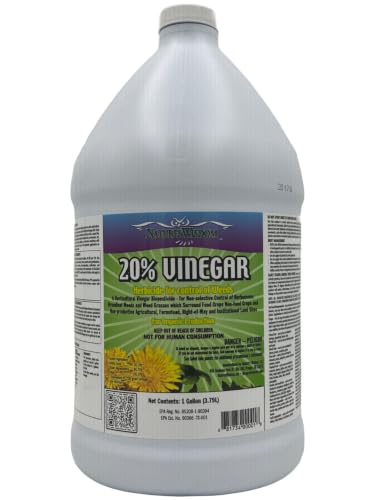
Effective on Most Broadleaf Weeds and Grasses. Eliminates weeds like crabgrass, dandelions, clover, and moss with full desiccation achieved in less than 24 hours.

Made in United States
How to Properly Mix and Dilute Horticultural Vinegar

Once we’ve selected the appropriate vinegar strength for our weed problem, we need to mix it correctly to achieve the desired acidity level.
Properly diluting horticultural vinegar to the right acidity level ensures maximum effectiveness against weeds while preventing waste of concentrated product.
For spring and early summer applications, we’ll combine horticultural vinegar with water in the right proportions to create an effective weed-killing solution.
Here’s our mixing guide:
- Mix 1 part horticultural vinegar to 1/2 part water for standard applications
- Target a 15% acidity rate for general weed spraying
- Use full strength for particularly stubborn weeds
- Pour mixture into backpack sprayers, hand-held sprayers, or spray bottles
- Adjust concentration based on weed severity and season
Additionally, it’s important to consider the natural pest control methods that can help maintain a balanced ecosystem in your garden while using vinegar for weed management.
Best Times and Conditions for Applying Vinegar to Weeds

Timing makes all the difference when we’re applying vinegar to weeds, and choosing the right conditions can mean the difference between success and wasted effort.
We’ll get the best results when we spray in mid to late afternoon on sunny days, as weeds become most vulnerable during hot weather. The heat amplifies vinegar’s effectiveness, causing leaves to curl and brown within 8 to 12 hours when using full-strength horticultural vinegar.
With diluted solutions, we should expect results within 24 hours or more, so patience is key for success. Additionally, using organic pest control methods like vinegar can help reduce reliance on chemical herbicides in your gardening practices.
Application Methods and Tools for Vinegar Weed Control

Several effective tools can deliver vinegar to weeds, each offering different advantages depending on the size of the area we’re treating.
Selecting the proper application tool ensures vinegar reaches weeds effectively while matching the scale of your treatment area.
For maximum efficiency, we’ll want to choose the right applicator:
- Backpack sprayers – ideal for large areas like driveways and patios
- Hand-held pump sprayers – perfect for medium-sized jobs and better control
- Spray bottles – best for spot-treating individual weeds in tight spaces
- Garden hose attachments – convenient for extensive coverage with quick setup
- Watering cans with spray nozzles – simple option for targeted applications
Each method works effectively when we apply the vinegar solution directly onto weed foliage. Additionally, using natural solutions can complement vinegar for a more comprehensive weed management strategy.
Protecting Your Desired Plants During Treatment

While these application tools make vinegar weed control straightforward, we need to remember that vinegar doesn’t discriminate between weeds and the plants we want to keep.
To protect your desired plants, flowers, and grass, we recommend covering them with plastic sheeting or cardboard before spraying. You can also use a piece of cardboard as a shield, holding it between the vinegar spray and your plants.
For precise application near valued plants, apply vinegar directly to weed leaves using a paintbrush or sponge instead of spraying, which prevents accidental contact with surrounding vegetation. Additionally, ensuring that your herbs thrive in proper conditions can help them compete more effectively against weeds in your garden.
Essential Safety Measures When Using Vinegar for Weeds

Although vinegar offers a natural alternative to chemical herbicides, horticultural vinegar’s high acidity levels require careful handling to prevent injury.
While vinegar provides an eco-friendly weed control option, its concentrated acidity demands the same careful safety measures as conventional herbicides.
We must take proper precautions to protect ourselves and others during application:
- Always wear protective goggles and gloves to prevent skin and eye burns from acid contact
- Keep children and pets away from treated areas during application
- Allow the solution to dry completely before letting anyone re-enter the space
- Store horticultural vinegar in clearly labeled containers away from household vinegar
- Apply on calm days to prevent drift onto skin or nearby plants
- Regularly inspect plants for any potential threats to ensure a healthy environment and effective weed control.
These simple steps guarantee safe, effective weed control.
Frequently Asked Questions
How Long Does Vinegar Weed Treatment Last Before Weeds Regrow?
Vinegar weed treatment typically lasts 2-4 weeks before weeds regrow. We’ll need to reapply the solution regularly throughout the growing season since vinegar kills foliage but doesn’t always destroy root systems completely.
Can Vinegar Kill Weed Seeds in the Soil Permanently?
No, vinegar won’t permanently kill weed seeds in the soil. It only affects what it contacts on the surface. We’ll need to reapply vinegar as new seeds germinate and weeds emerge from the soil.
Does Vinegar Affect Soil Ph Levels After Repeated Applications?
Yes, we need to be aware that repeated vinegar applications can lower soil pH levels over time, making it more acidic. This may affect plant growth in treated areas, so we recommend limiting applications to non-planting zones.
Will Vinegar Damage Concrete, Pavers, or Other Hardscape Materials?
We’ve found that vinegar won’t damage concrete, pavers, or hardscape materials when used for weed control. It’s safe to apply on patios, driveways, and walkways without worrying about harming these surfaces.
How Does Vinegar Compare to Other Natural Weed Killers Like Salt?
While salt scorches like a permanent brand on the earth, we prefer vinegar’s gentler touch. It breaks down naturally, won’t sterilize your soil, and targets weeds without leaving lasting damage to surrounding areas.
Conclusion
We’ve armed you with the knowledge to tackle weeds naturally using vinegar, from selecting the right concentration to timing your applications perfectly. As the old saying goes, “an ounce of prevention is worth a pound of cure,” and that applies here—consistent treatment prevents future weed problems. Remember to follow safety protocols, protect your desirable plants, and apply vinegar during ideal conditions. With patience and proper technique, you’ll achieve the weed-free outdoor spaces you deserve while staying true to your natural living values.


