


Imagine you grab a $12 bundle of grocery store sunflowers and turn it into a centerpiece that stops guests mid-conversation. You don’t need a florist’s training or a big budget to pull that off. These 15 autumn arrangements show you exactly how color, texture, and simple structure work together, and what you’ll discover about each technique might completely change how you decorate this fall.
Key Takeaways
- Cluster deep burgundy roses tightly in a low, wide vase and add a velvet ribbon for an instantly polished, florist-worthy look.
- Combine plum dahlias, copper-toned roses, and teal eucalyptus in a dark vase to create dramatic, jewel-toned arrangements with professional depth.
- Use pampas grass as tall anchors and layer seed pods at varying heights to achieve sophisticated, airy textural compositions.
- Hollow out a medium pumpkin as a vase and fill with marigolds and Baby’s Breath for a creative, seasonal centerpiece.
- Vary stem lengths, cluster blooms in odd numbers, and use matte or vintage vessels to elevate any arrangement’s visual impact.
Budget-Friendly Autumn Arrangements Under $20

Many beautiful autumn arrangements can be made for under $20, and you don’t need a big budget to create something stunning. Try seasonal foraging tips like collecting pinecones, dried seed pods, and colorful fallen leaves from your yard or local park. These free finds add real texture and depth.
Pair foraged items with a few grocery store stems, and you’ll create a rich, layered look. Thrifted vessels like old mason jars or ceramic bowls give your arrangement a unique, creative edge. You don’t need expensive supplies, and smart choices make all the difference in the final result. When storing or displaying foraged pinecones, try mixing in coffee grounds to boost beneficial soil microorganisms and keep your natural elements fresher longer.
Recommended Products

1. 13-Piece Florist Tools Set: Includes 1 lined wicker basket, 1 snap-corner flower repotting mat, 1 pair of gloves, 1 pruning shear, 1 pair of floral scissors, 2 rigid stem-cleaning tools, 3 flexible thorn removers and 3 green floral tape rolls.
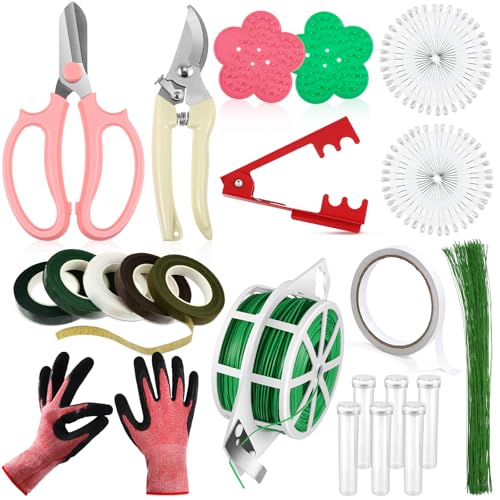
Comprehensive Floral Arrangement Tool Set: this floral arrangement kit is suitable for flower arranging and crafting; Including 2 tray of white and color corsage pins, 2 flower stem cutters, 3 rose thorn removal tools, 1 pair of gardening gloves, 100 green stem wires, and a variety of additional tools such as 5 rolls of floral tapes, cable ties, double sided tape, and 12 flower branch water storage hoses, providing possibilities for creative flower arranging

Fall Planters Decorations Set: Includes 8pcs fall pumpkin yard stakes in 8 different designs; the assorted designs add a festive harvest touch to potted plants, gardens, patios and seasonal decorating
Grocery Store Flowers Styled to Look Florist-Made

Picking up a few bundles at your local grocery store can lead to surprisingly beautiful results. You don’t need expensive blooms to create something stunning.
Grab sunflowers, eucalyptus, and seasonal foraging finds like berry branches or small pumpkins. Understanding arrangement mechanics helps you build layers, so place tall stems first, then fill gaps with shorter ones.
Strip extra leaves below the waterline to keep blooms fresh longer. Mix textures boldly, and wrap your vase with twine for a polished finish. For even more seasonal color, consider adding ornamental pepper stems, which display multiple simultaneous colors and hold up beautifully in cut arrangements through late fall. You’ve got this, and your arrangement will genuinely impress everyone who sees it.
Recommended Products

Complete Flower Prep Arranging Kit: from trimming stems and removing thorns to wiring, wrapping and arranging bouquets, this 211-piece florist kit brings essential flower...
Rustic Wildflower Bundles With Dried Wheat and Dahlias

Rustic wildflower bundles combine dried wheat, dahlias, and loose wildflowers into something genuinely warm and textured. You’ll gather stems into loose clusters, and the wheat dahlia pairing creates natural contrast between soft petals and crisp grain.
Try layering shorter dahlia heads near the center, and place taller wheat stems behind them for depth. Wildflower crownmaking uses this same layering logic, so you’re already learning a transferable skill.
Secure everything with floral tape or twine, and trim stems evenly at the base. Your bundle doesn’t need perfection, and its organic look is exactly what makes it feel intentional. Once your bundle is complete, displaying it near a rustic stone fire pit can amplify the warm, natural aesthetic of both elements together.
Pumpkin Vase Centerpieces Stuffed With Marigolds and Foliage

From bundled stems to something a little more sculptural, pumpkin vase centerpieces bring autumn right to your table.
Hollow out a medium pumpkin and tuck in a water-filled jar, so your marigolds and foliage stay fresh longer. Layer marigold mosaics across the top by grouping blooms in color clusters, and you’ll create bold, eye-catching texture.
Add pumpkin succulents around the base for an unexpected, modern twist. Choose deep oranges, burgundies, and greens to build contrast, and your arrangement will look professionally designed.
For an extra layer of softness and elegance, weave sprigs of dried Baby’s Breath between the marigolds to fill gaps and add an airy, ethereal quality to the overall arrangement.
This creative approach transforms a simple gourd into a stunning, florist-worthy centerpiece you’ll proudly display all season.
Garden-Style Arrangements With Sunflowers and Rosehips

Garden-style arrangements capture the easy, natural beauty of a late-season garden. You’ll love how sunflower textures add warmth and visual depth to any vase.
Start with a wide-mouthed container, and layer tall sunflowers at varying heights for movement. Rosehip accents work beautifully between blooms, adding rich red tones and organic shape.
You don’t need perfect symmetry here. Let stems lean naturally, and tuck in dried grasses or eucalyptus for earthy contrast.
This relaxed approach creates something fresh and modern. Your arrangement will look intentional yet effortlessly wild, like you just gathered it straight from the garden. To extend the enchanting atmosphere beyond the vase, consider placing your finished arrangement near a pathway bordered by low-growing night-blooming flowers that release fragrance after sunset.
Deep Burgundy and Blush Rose Arrangements for the Dining Table

When you want a dining table arrangement that feels elegant and intimate, deep burgundy and blush roses are a perfect pairing.
Cluster the roses tightly in a low, wide vase so guests can see each other across the table. Add a velvet ribbon around the vase for a rich, textured touch.
Keep stems short and dense for a full, lush look. Candle pairing works beautifully here, so place slim taper candles nearby to cast warm light across the blooms.
This combination creates a moody, sophisticated centerpiece that feels fresh and intentional. For an added layer of texture, consider tucking in trailing ivy along the edges of the vase to create a cascading effect that softens the arrangement’s structure.
Burnt Orange and Chocolate Brown Arrangements for Cozy Spaces

While burgundy and blush bring drama to the dining table, burnt orange and chocolate brown take things in a warmer, cozier direction. These colors pair beautifully with cozy textiles like chunky knit throws and velvet pillows. Try combining dahlias, marigolds, and dried seedpods in a low wooden bowl, and you’ll create instant warmth. Place your arrangement near ambient lighting, like a lamp or candles, so the colors glow richly. Brown stems, like chocolate cosmos, add depth without heaviness. You don’t need many flowers to make this work, because a few bold blooms create a striking, lived-in feeling. For an effortless finishing touch, tuck in a few stems of blanket flower, whose vivid red, orange, and yellow tones make it a natural fit for warm autumn arrangements.
Jewel-Toned Arrangements in Plum, Teal, and Copper

Beyond the warm tones of orange and brown, jewel-toned arrangements offer something bolder and more striking.
You can create a rich, layered look with plum accents, teal foliage, and copper elements.
Try these four steps:
- Choose deep plum dahlias as your focal flowers.
- Add teal foliage like eucalyptus for cool contrast.
- Tuck in copper-toned roses to warm the palette.
- Use a dark vase to anchor the jewel tones.
These colors feel luxurious and unexpected, and they’ll make any room feel intentional and creative. For an organic, textured filler, consider incorporating shredded leaves and straw into your arrangement base to add depth and an earthy, autumnal quality.
You’ve got this!
Tall Dramatic Arrangements With Branches and Autumn Berries

Jewel tones are beautiful, but sometimes you want something with more height and drama. Tall arrangements with branch silhouettes create striking visual impact, and they’re easier to build than you’d think.
Start with a sturdy vase and push bare branches deep into floral foam. Add berry clusters at different heights, and tuck in a few leaves for fullness. Varying the branch heights adds natural movement to your design.
You don’t need many materials to make a bold statement, and this style looks intentional and architecturally interesting from across any room. For an even bolder display, consider potting a croton nearby, as its foliage shifts through fiery reds, oranges, and yellows when placed in bright, indirect light for six to eight hours daily.
Low-Bowl Centerpieces With Mushrooms, Moss, and Blooms

Simplicity has its own kind of beauty, and low-bowl centerpieces bring that quality right to your table. Vintage bowls work perfectly as your base, and foraged fungi add earthy texture. Try this four-step approach:
- Fill your bowl with damp floral foam
- Press sheet moss firmly around the foam’s edges
- Tuck foraged fungi between clusters of small blooms
- Add berries or seed pods for depth
You’re creating a miniature forest scene. Keep blooms low and clustered, and let the mushrooms tell their own quiet story. For a complementary outdoor touch, a mossy millstone water feature nearby can reinforce the same naturalistic, forest-floor aesthetic you’re cultivating at the table.
Pampas Grass and Seed Pod Arrangements With Layered Texture

While mushrooms and moss bring the forest floor to your table, pampas grass and seed pods lift your eyes upward with sweeping, airy movement. Start with tall pampas textures as your anchor, and then layer in seedpod silhouettes at varying heights to create depth.
Choose pods with interesting shapes, like lotus or poppy, because contrast makes your arrangement more visually dynamic. Cut stems at different lengths so nothing looks stiff or uniform.
You’re building movement, not just filling space. This technique transforms a simple vase into something genuinely striking, and anyone can master it with a little patience. For a cohesive display, pair your arrangement with trailing hanging plants like pothos or hoya nearby, whose cascading vines echo the same sweeping movement found in pampas grass compositions.
Compact Bud Vase Clusters for Mantels and Windowsills

Bud vases punch above their weight when you arrange them in small clusters. Try mixing three to five vases of different heights for visual interest. Miniature clusters work beautifully on mantels and windowsill vignettes alike.
Here’s how to style them well:
- Vary vase heights between two and six inches
- Use odd numbers of vases for balance
- Mix textures like matte ceramic and clear glass
- Add single stems of dried wheat, mini mums, or berries
You don’t need many blooms. Small and intentional beats big and cluttered every time. For a seasonal touch, position one vase slightly off-center within the cluster to introduce visual sophistication without disrupting the overall arrangement.
Single-Stem Autumn Arrangements That Look Like They Cost $80

One well-chosen stem can do a lot of heavy lifting. Choose a tall dried pampas plume or a bold sunflower, and place it in a matte vase for an instantly polished look. The muted finish makes the stem pop without competing with it.
Tie a velvet ribbon around the vase neck, and you’ll add texture that feels intentional and elevated. Keep the stem slightly off-center so it looks styled, not stiff.
You don’t need multiple flowers to make an impact. One strong stem, the right vase, and a simple ribbon create something genuinely impressive.
Dried Leaf and Eucalyptus Arrangements That Last Weeks

Dried leaves and eucalyptus are a smart pairing because they hold their shape and color for weeks without any water. Use these preservation techniques and scent pairing ideas to elevate your arrangement:
- Press colorful leaves flat between books for two weeks
- Hang eucalyptus upside down to dry and preserve its scent
- Combine dried oak leaves with silver-dollar eucalyptus for contrast
- Add a cinnamon stick for warm scent pairing
You don’t need special tools. Just patience and a good eye for color combinations create stunning, long-lasting results.
Autumn Wreath Arrangements Using Seasonal Blooms and Foliage

Autumn wreaths bring warm, seasonal color to any door or wall.
Start with a harvest grapevine base, and weave in dried sunflowers, small pumpkins, and burgundy mums. You’ll love how cinnamon sprigs add a subtle, spiced scent that completes the seasonal feel.
Tuck in sprigs of preserved eucalyptus between blooms, and use floral wire to secure heavier elements tightly.
Choose colors like rust, gold, and deep red, because these shades create a rich, layered look.
Your finished wreath can last several weeks with minimal upkeep, making it a smart, beautiful investment for your home.
Frequently Asked Questions
How Long Do Fresh Autumn Floral Arrangements Typically Last Before Wilting?
Your fresh autumn arrangements typically last 7–14 days. You’ll extend their vase life by revitalizing cool water temperature daily and trimming stems every few days to optimize hydration uptake innovatively.
Which Autumn Flowers Are Toxic to Pets and Small Children?
When crafting autumn arrangements, you’ll want to avoid lily toxicity and autumn aconite, as both harm pets and children. Chrysanthemums and foxglove also pose serious risks, so you’re better off substituting safer, equally stunning alternatives.
Can Autumn Arrangements Survive Outdoors in Cold Temperatures?
Some arrangements can survive outdoors if you choose cold hardy placement spots shielded from harsh winds. You’ll also want to apply freeze protection methods, like covering blooms overnight, to keep your innovative autumn displays thriving longer in dropping temperatures.
What Floral Preservatives Extend the Life of Autumn Arrangements?
Ironically, your stunning arrangements don’t last forever, but you’ll extend their life using floral food packets and preservative sprays. You’re innovating longevity by balancing sugar, acidifiers, and biocides to keep autumn blooms thriving longer.
Are There Allergy-Friendly Alternatives to Common Autumn Blooms?
You’ll love swapping ragweed-heavy blooms for lifelike silk blossoms that mimic dahlias and marigolds. Pair them with hypoallergenic fillers like preserved eucalyptus, and you’ve got stunning, sneeze-free arrangements that’ll impress everyone.
Conclusion
You don’t need a florist’s budget to create something beautiful. Rome wasn’t built in a day, and your arranging skills will grow with every bouquet you make. Start with one style that fits your space and budget, then build from there. Mix textures, add a few dried elements, and trust your eye. You’ve got everything you need to make your home feel warm and ready for autumn.


